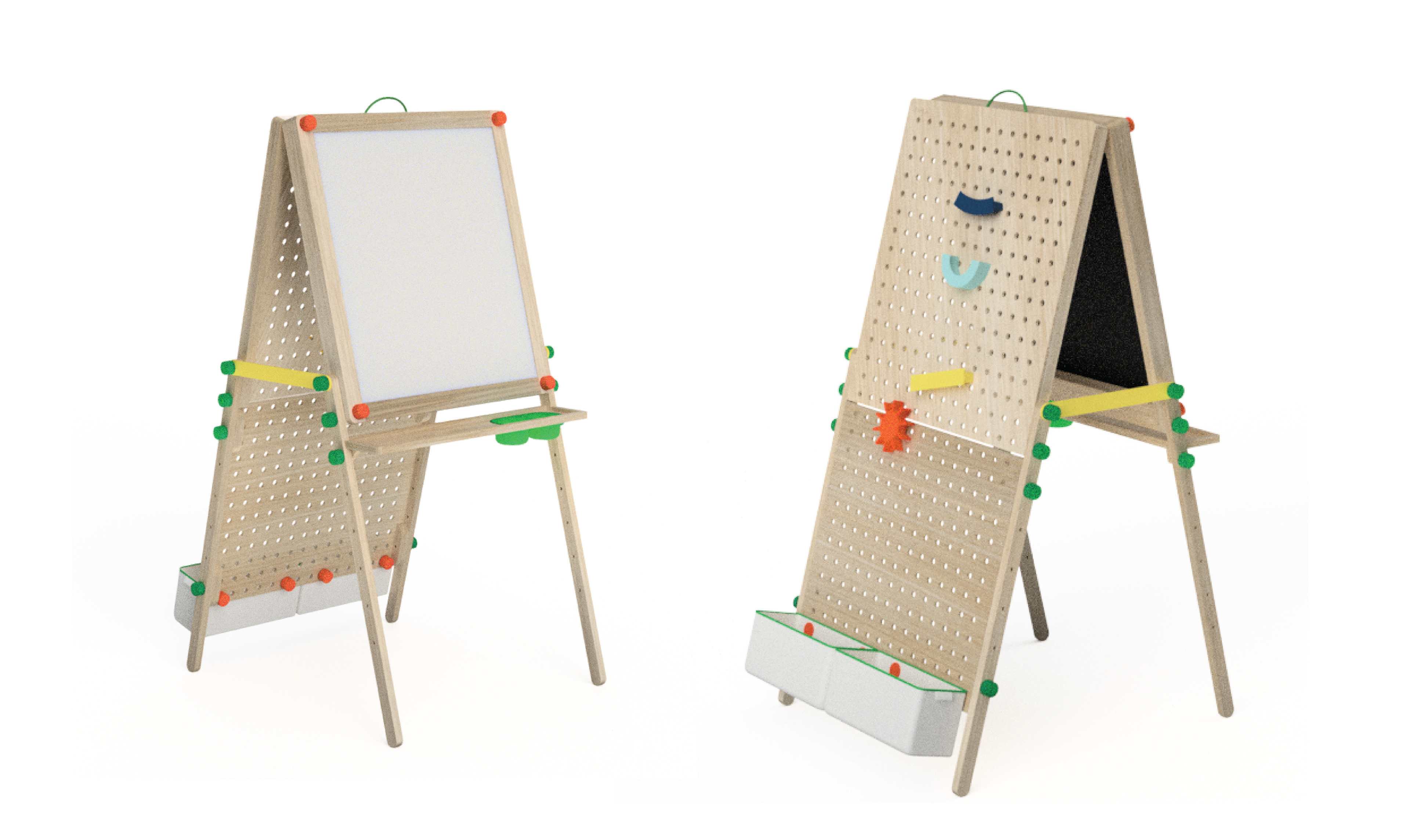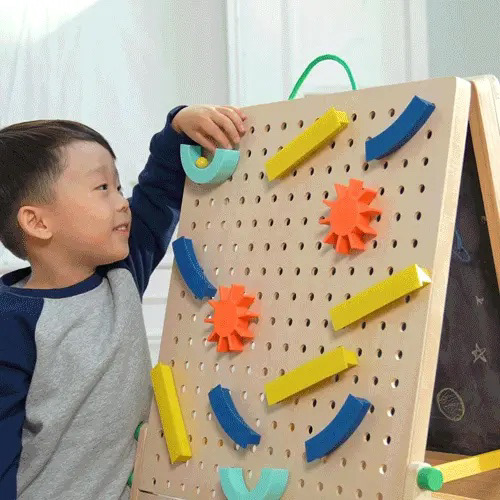
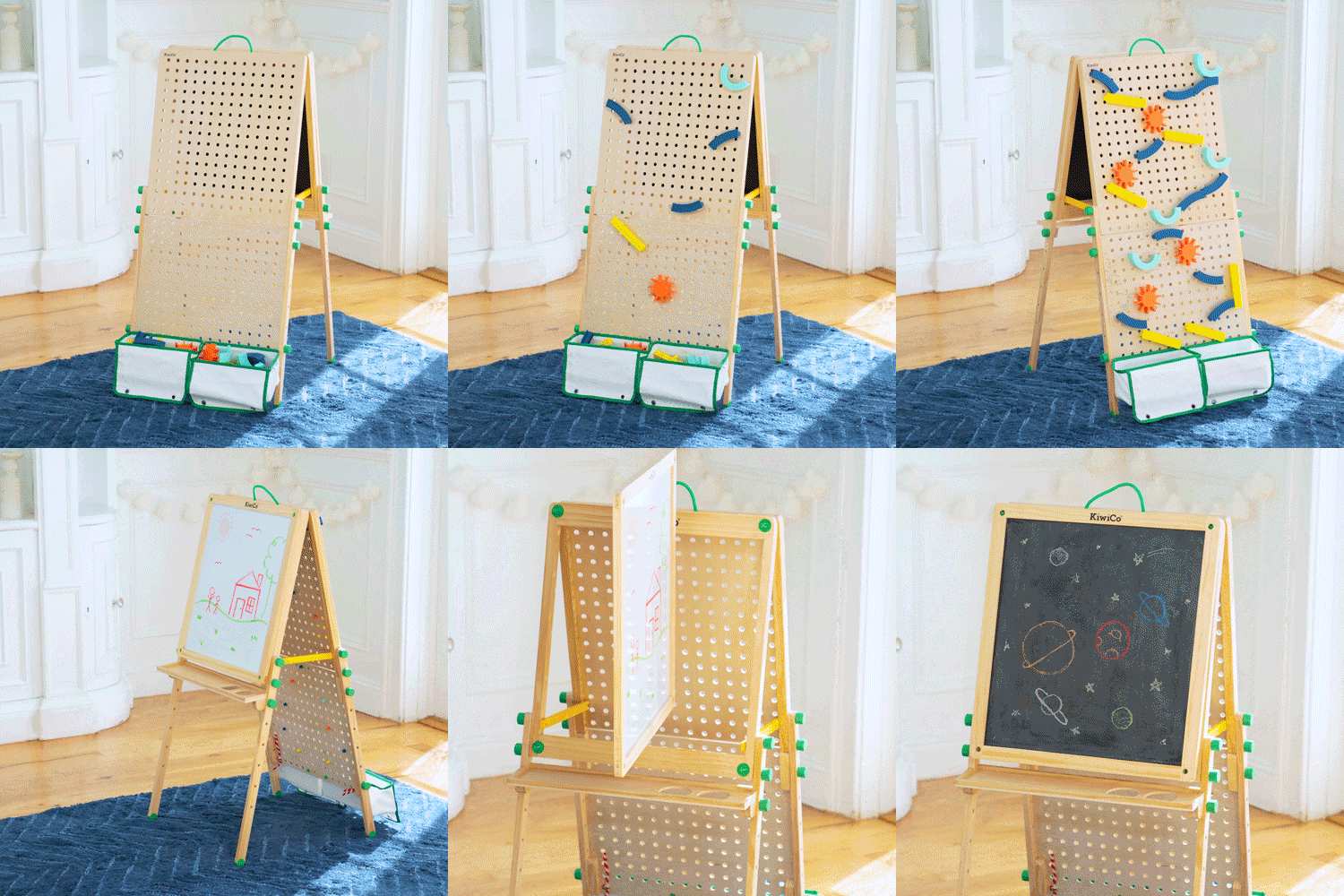
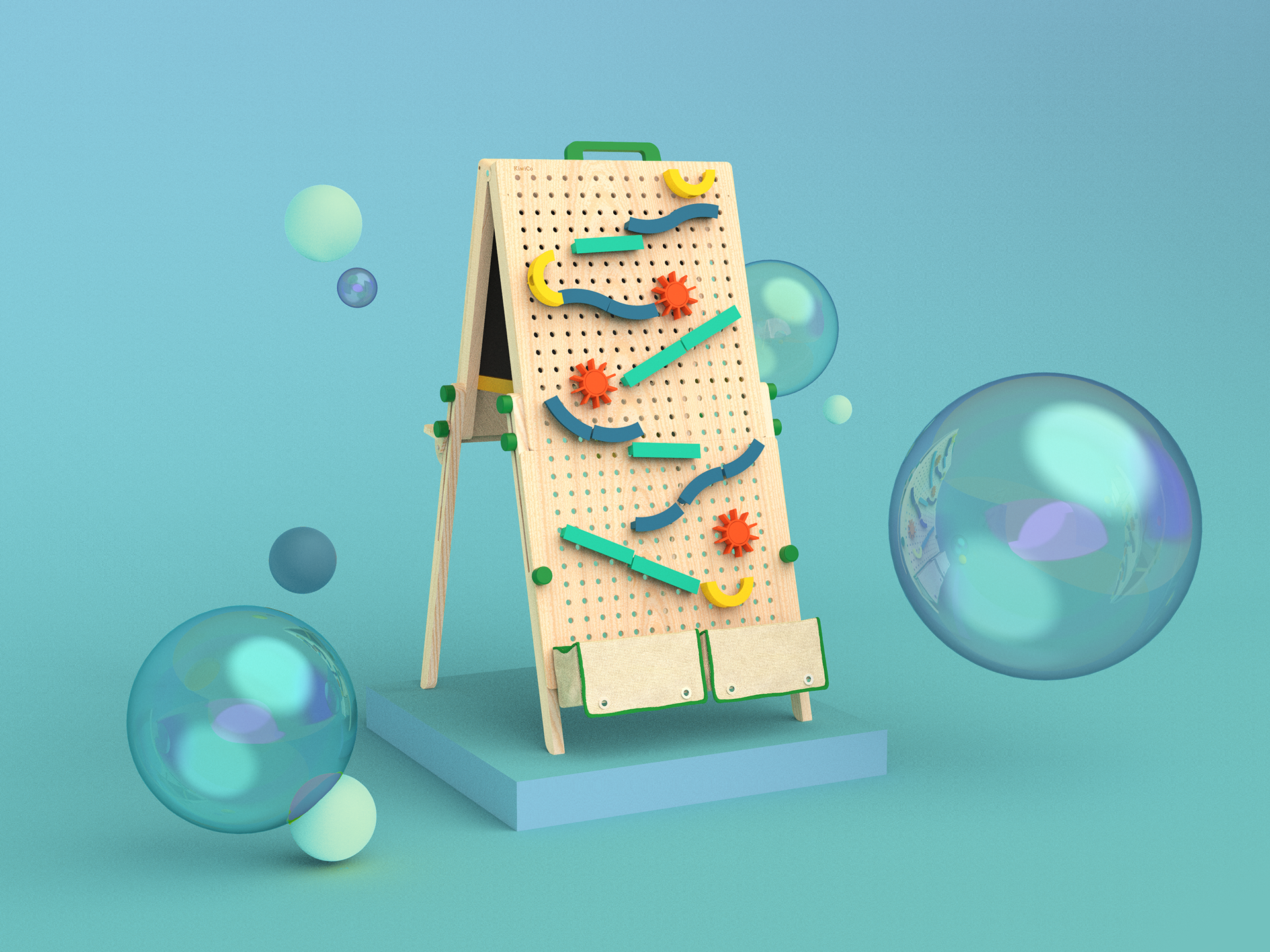
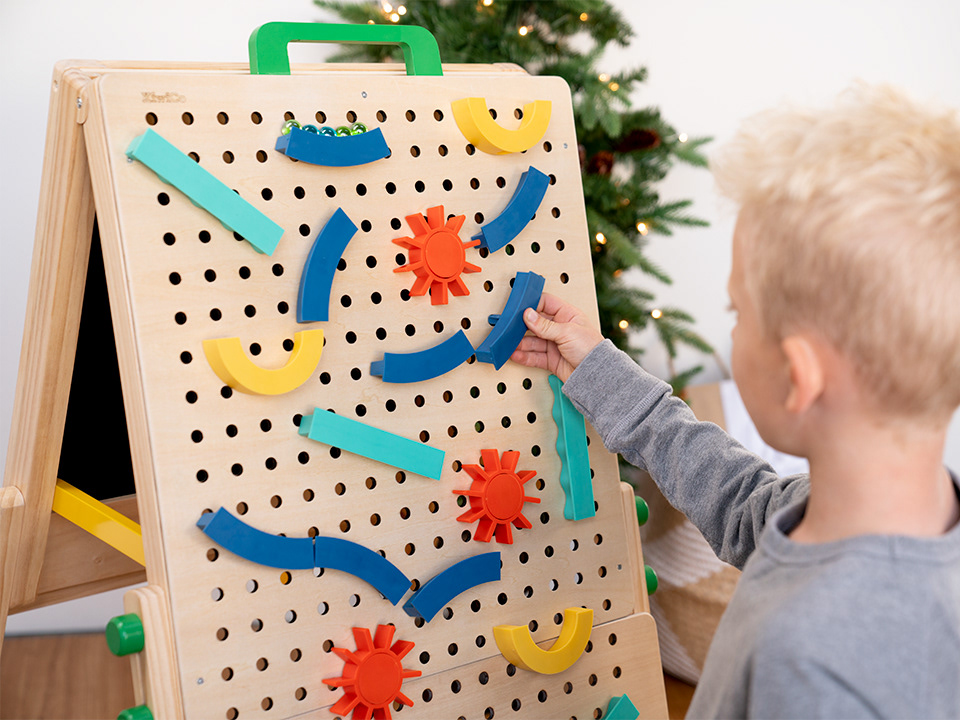
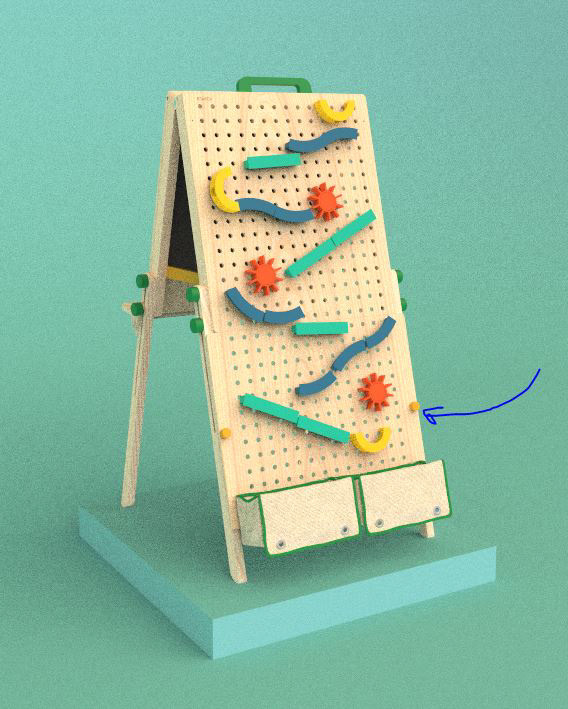
Press reversible tracks into the easel to roll, spin, hop and drop marbles through any course you engineer.

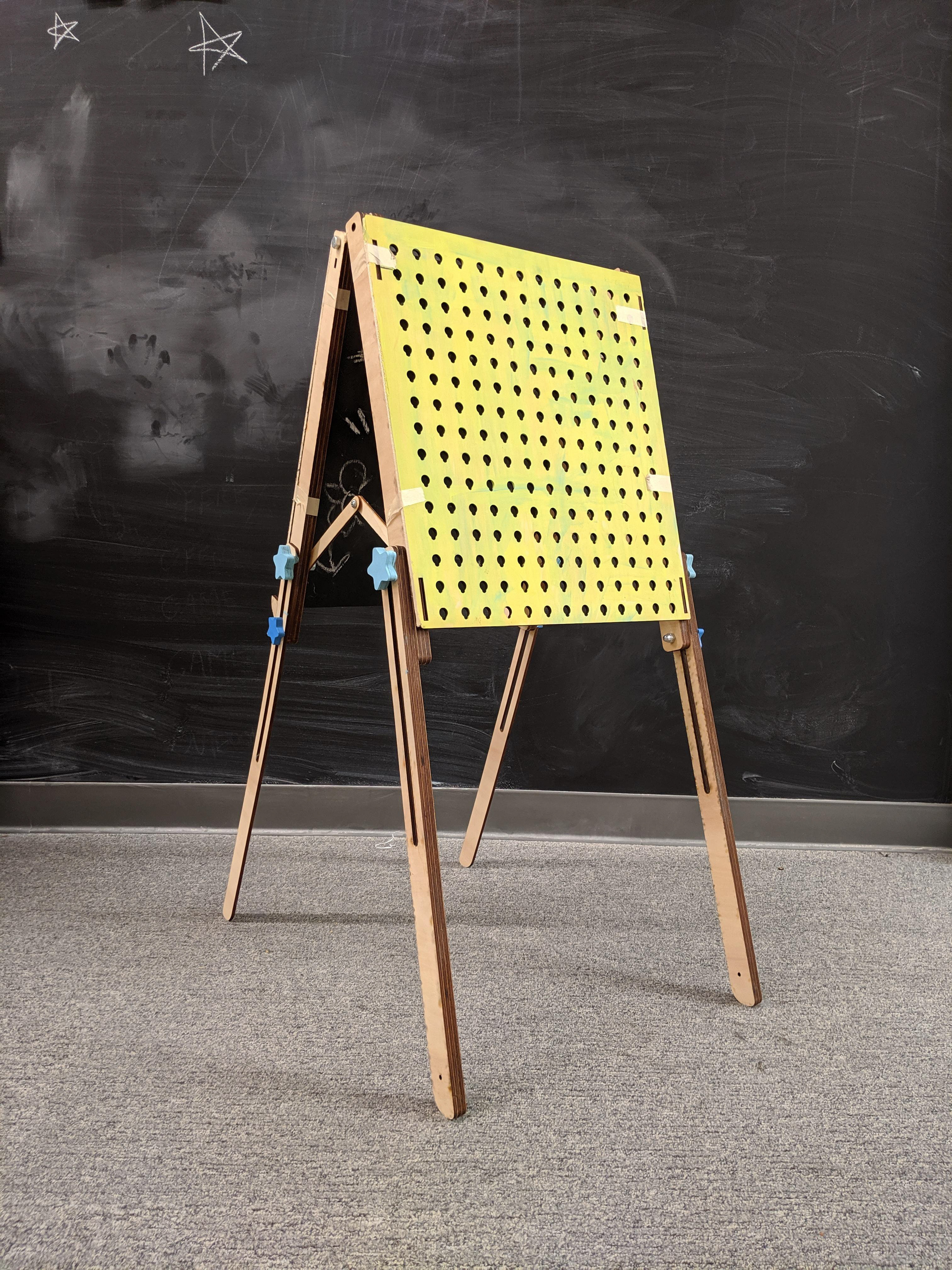
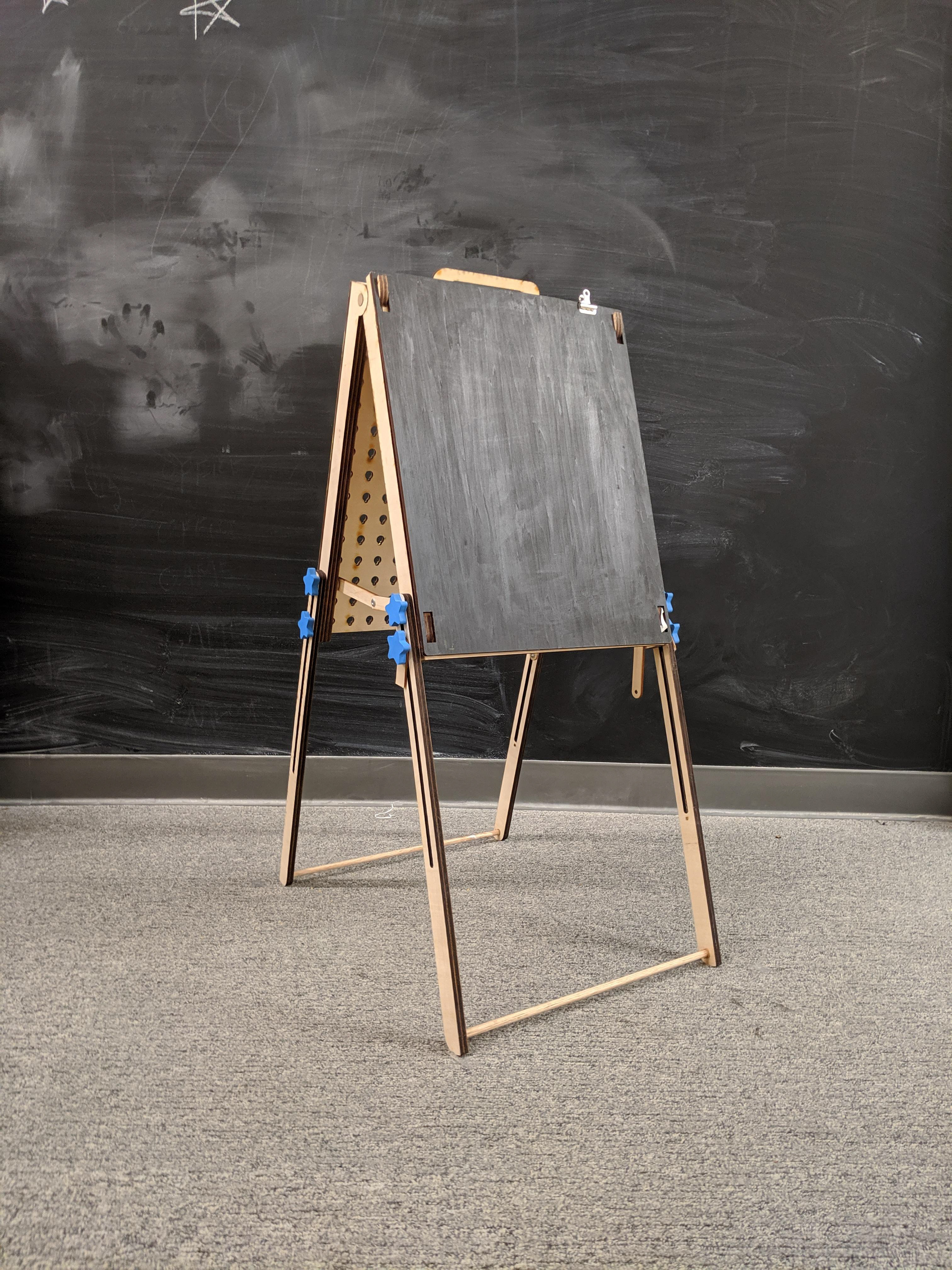
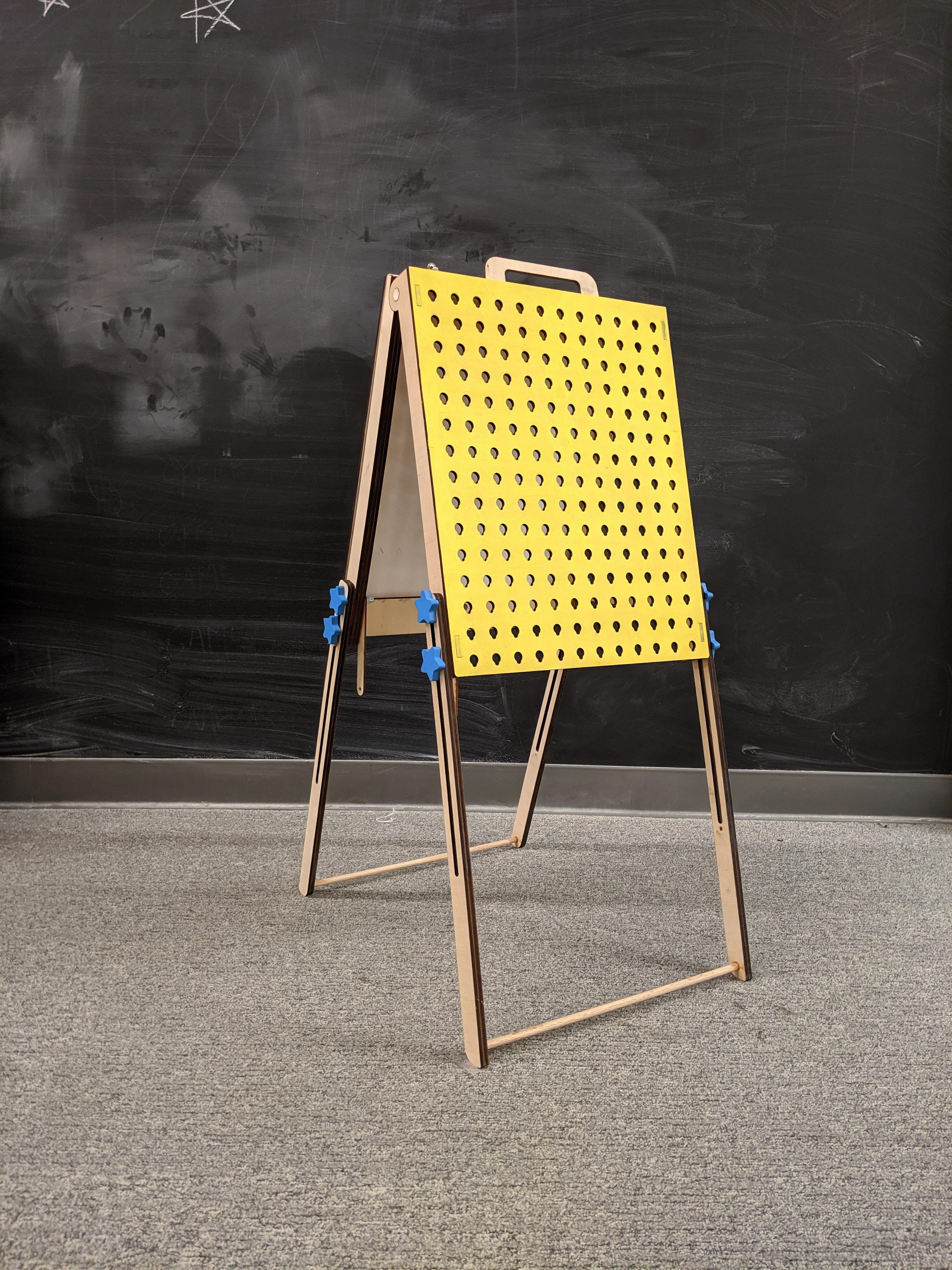
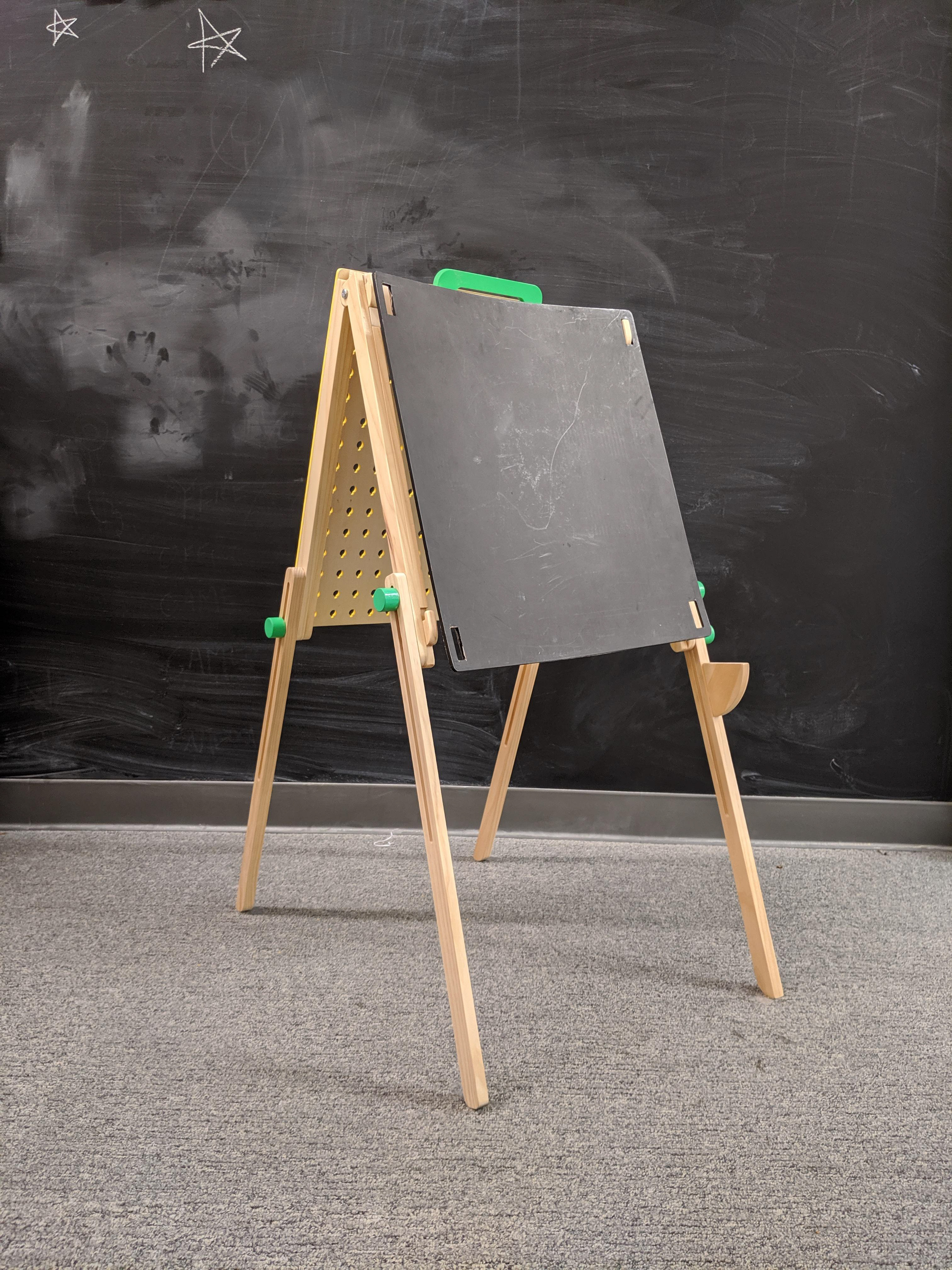
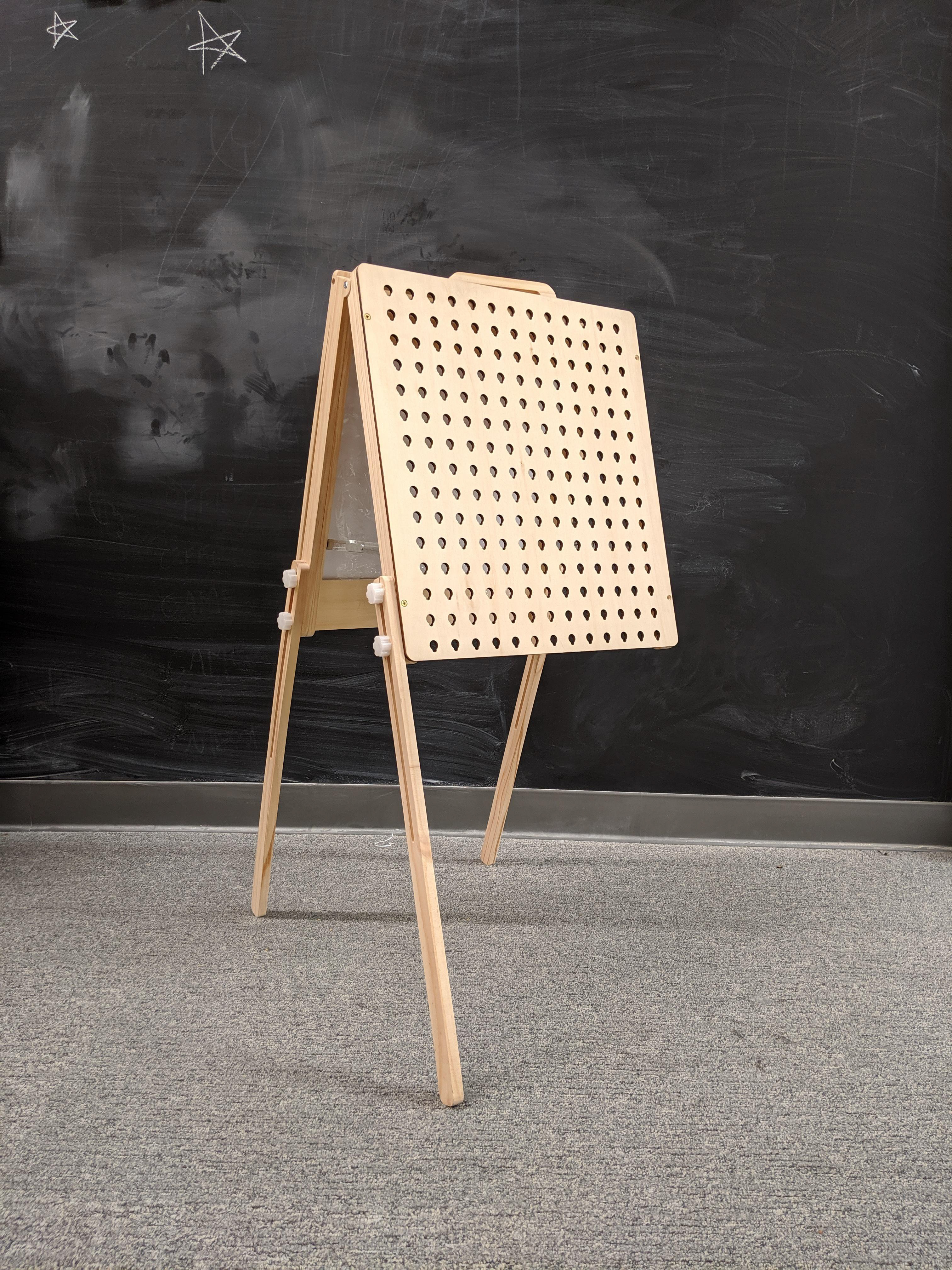
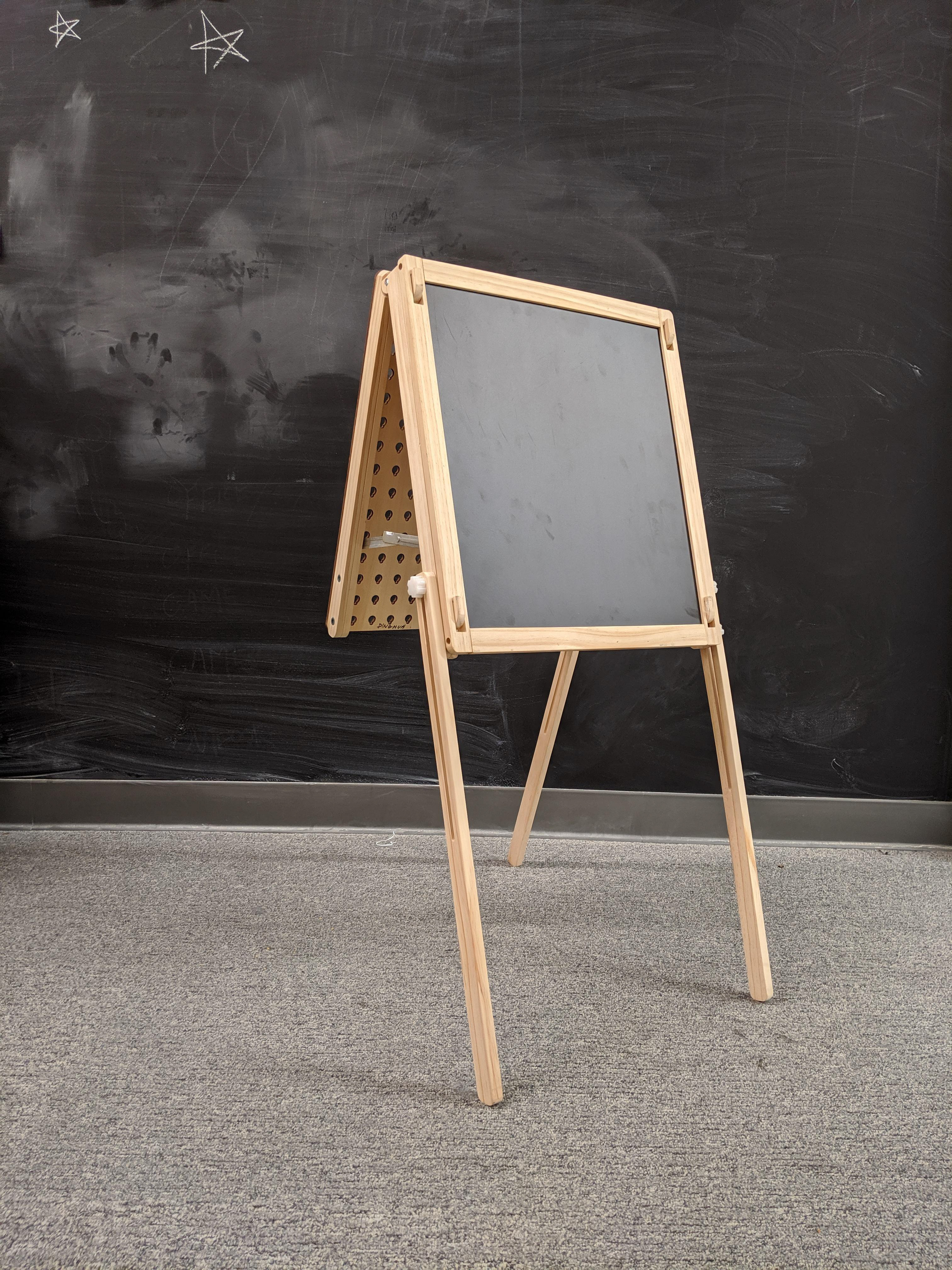
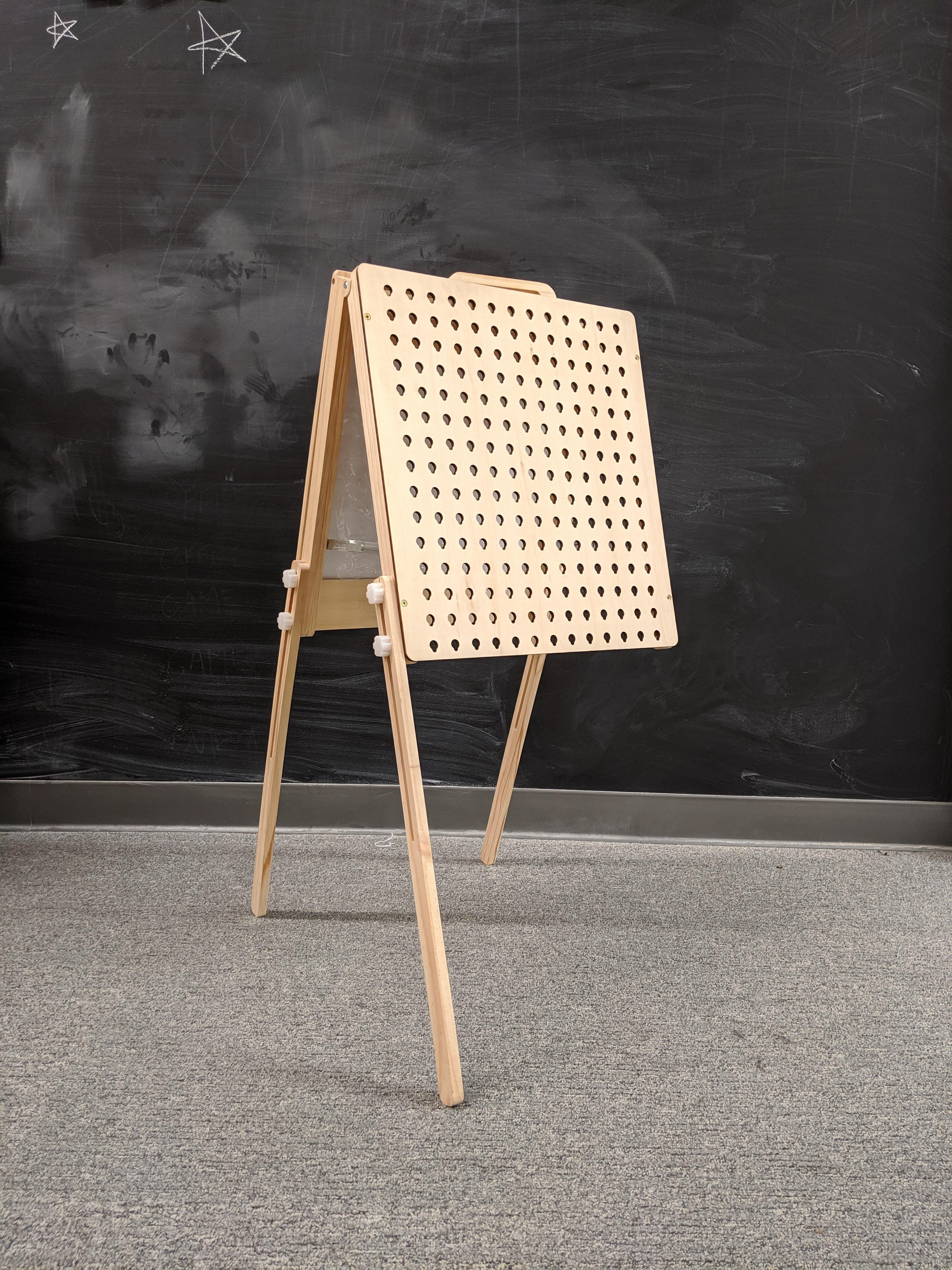
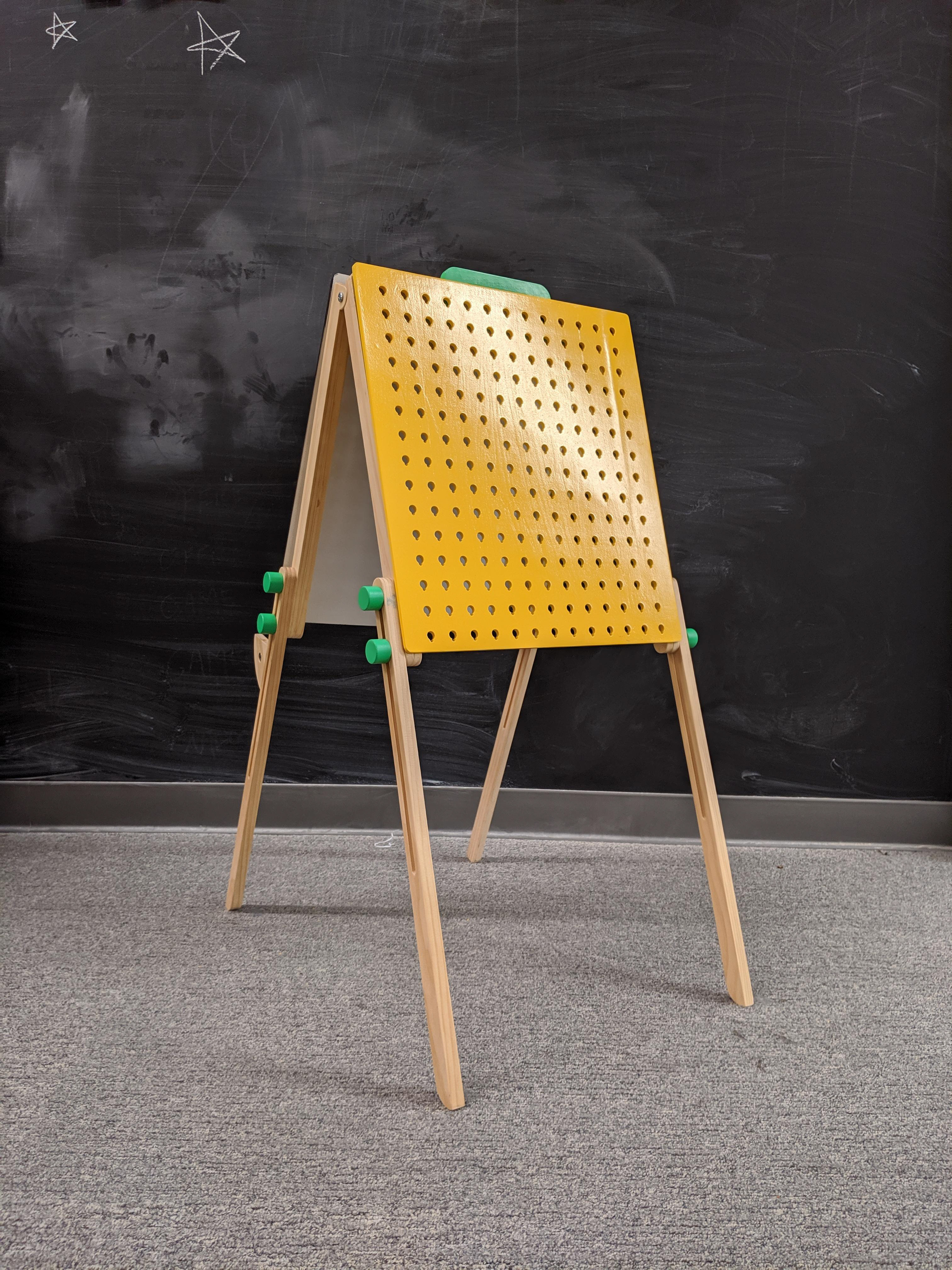
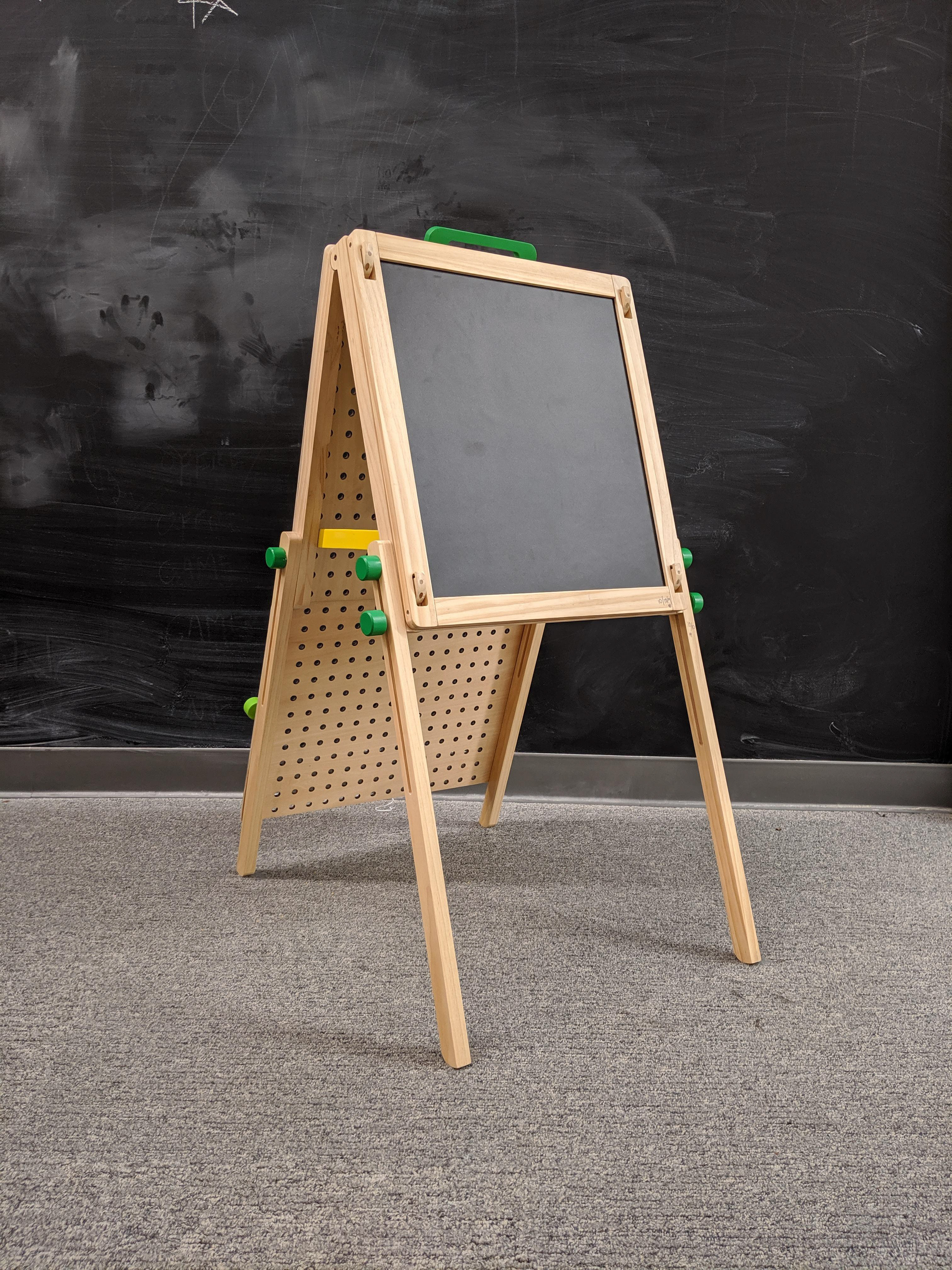
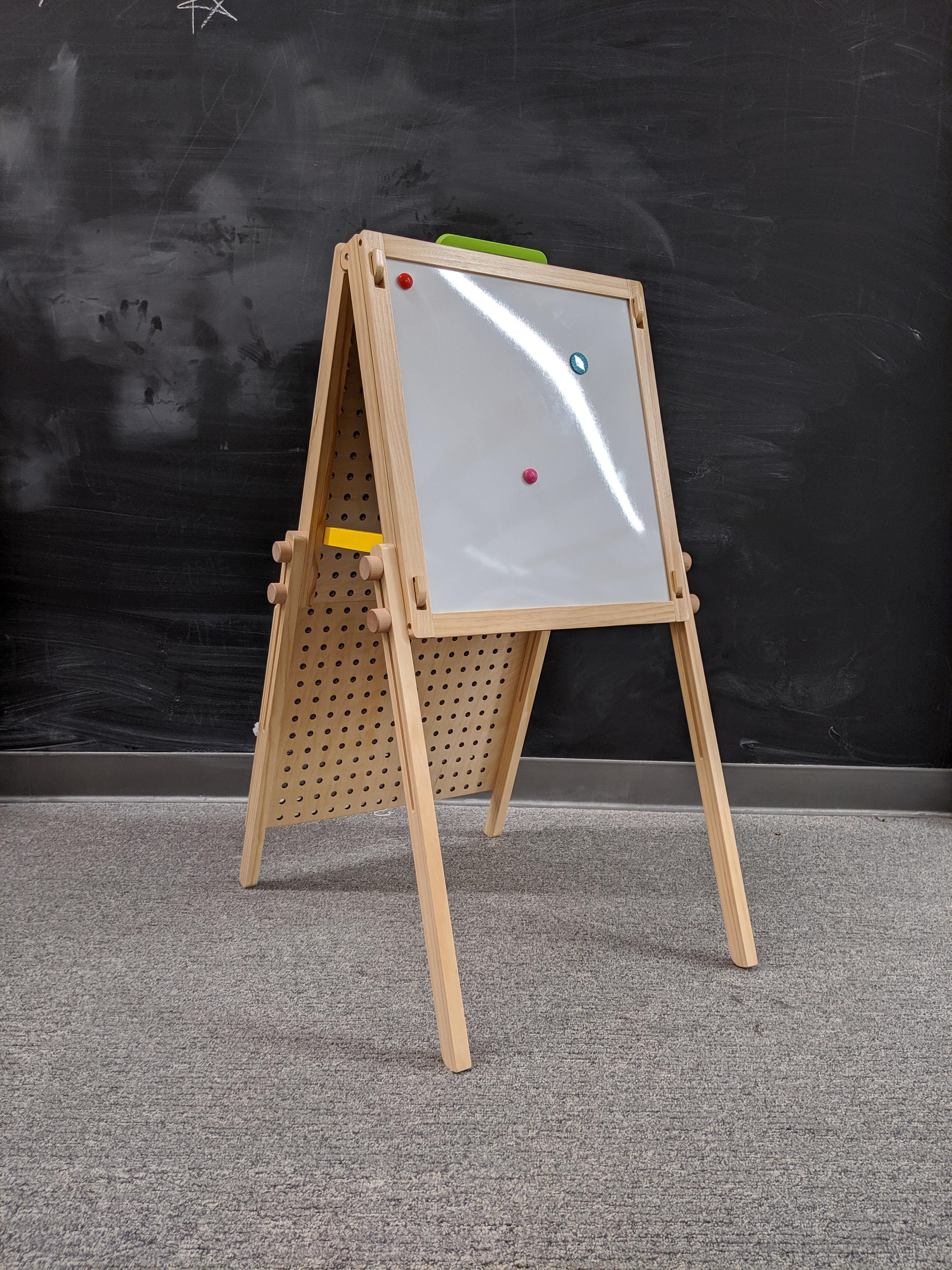
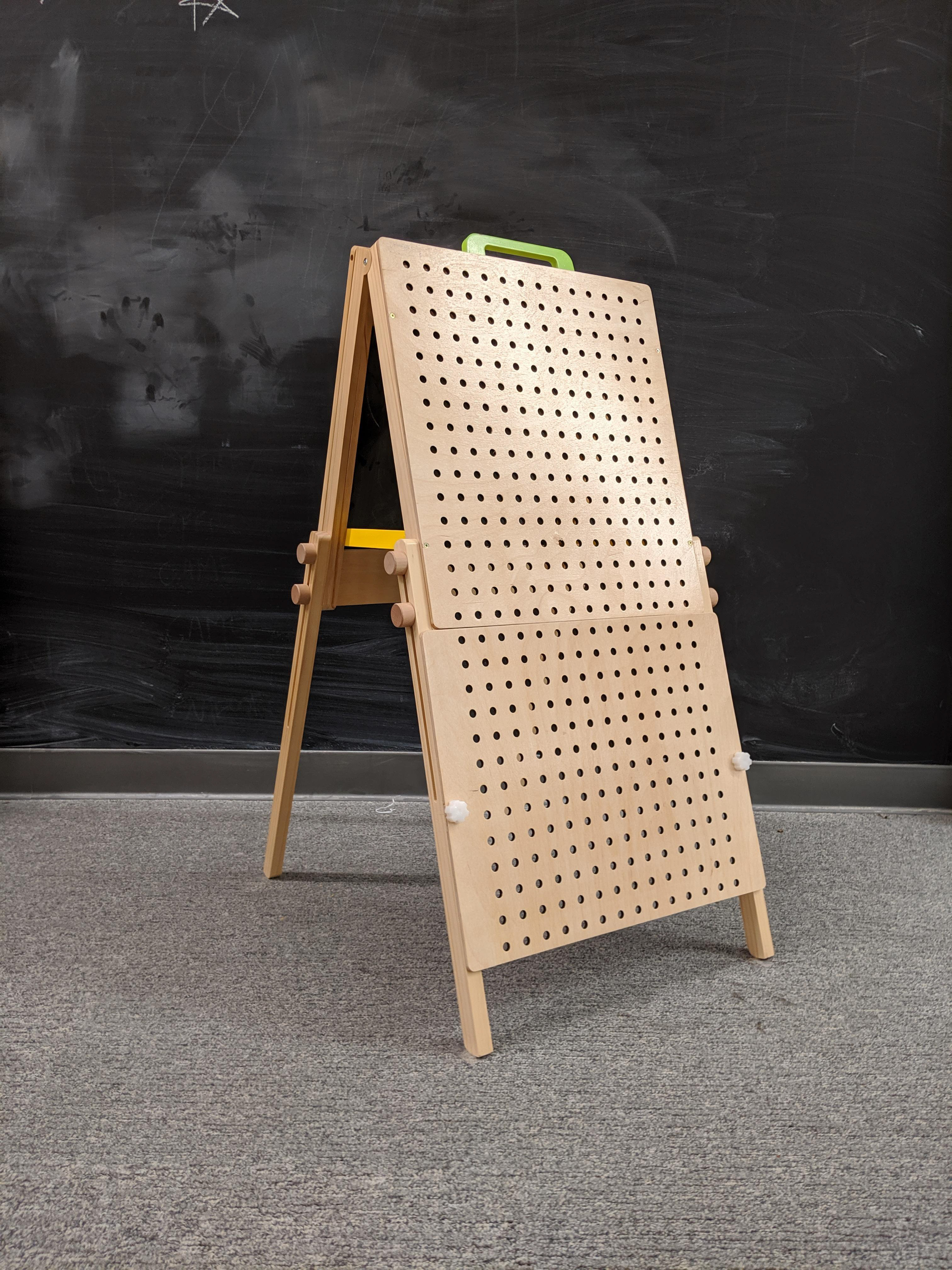
For moms, we heard again and again that grow-with-me & multi-use features were critical, so the product doubles an art easel complete with a reversible chalkboard & whiteboard. The entire toy is also height adjustable, and can be collapsed flat for storage.
* KiwiCo did not have specialized roles for engineering, CMF, project management, packaging design, or research at the time. So me and a partner to help communicate with factory and negotiate final price & PO were it. It was the best education & a blast.
process
1. INSPIRATION (insight: 3D to 2D)
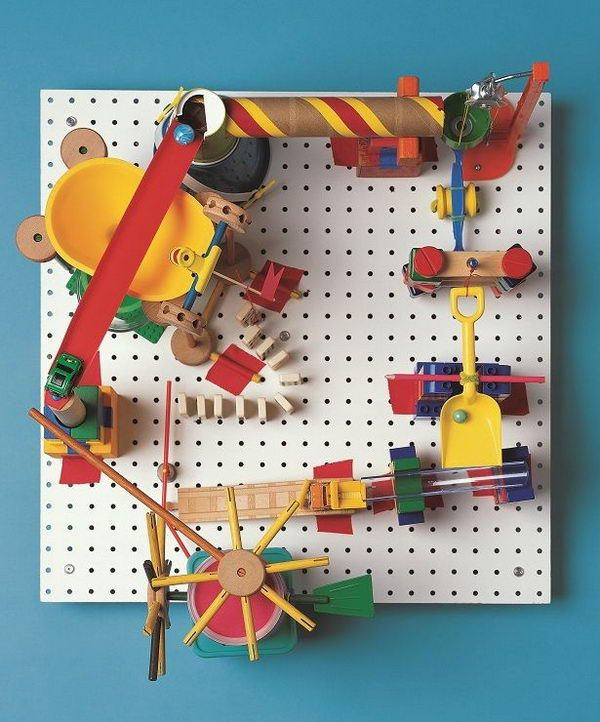
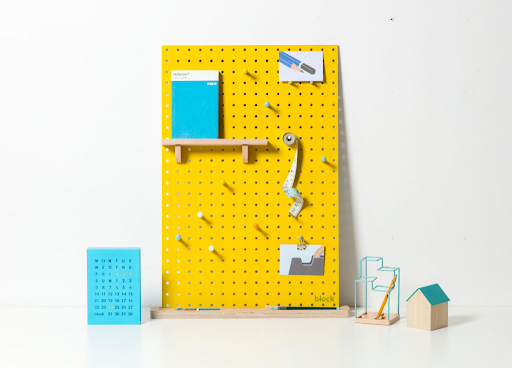
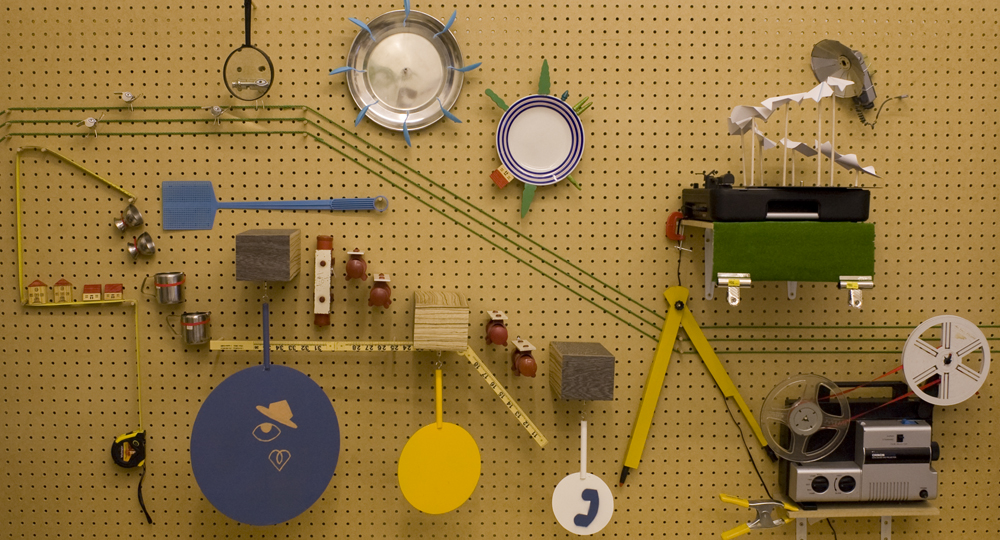
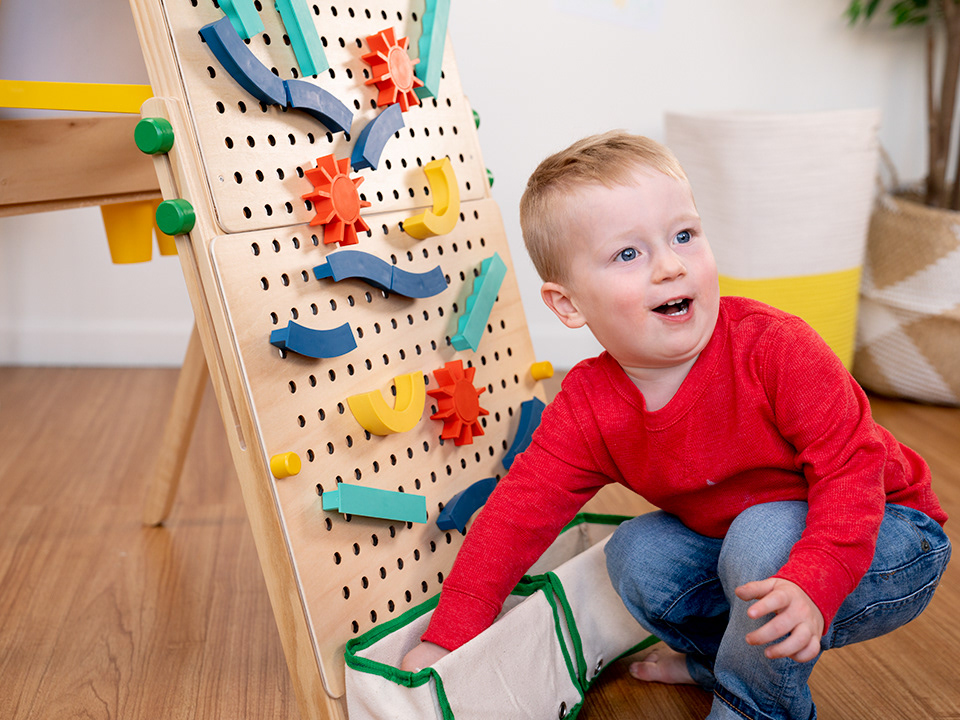
Little kids love watching marbles roll, drop, spin, hop through those big awesome tracks -- and it's a great way for them to learn cause and effect. Unfortunately, most marble tracks on the market are WAAAY too difficult for little ones to engage with.
I tested a number of on the market track systems with varying ages, and I found that most either prioritized an ok tactile experience or reliable functionality, usually at the expense of the other. Across the board though, they were WAY too difficult for 3+. Designing in and through 3D space is not even a skill innate to most adults. So first up: remove and axis of complexity. It would be a 2D maze.
2. VALIDATION PROTOTYPE (insight: incline & scale)
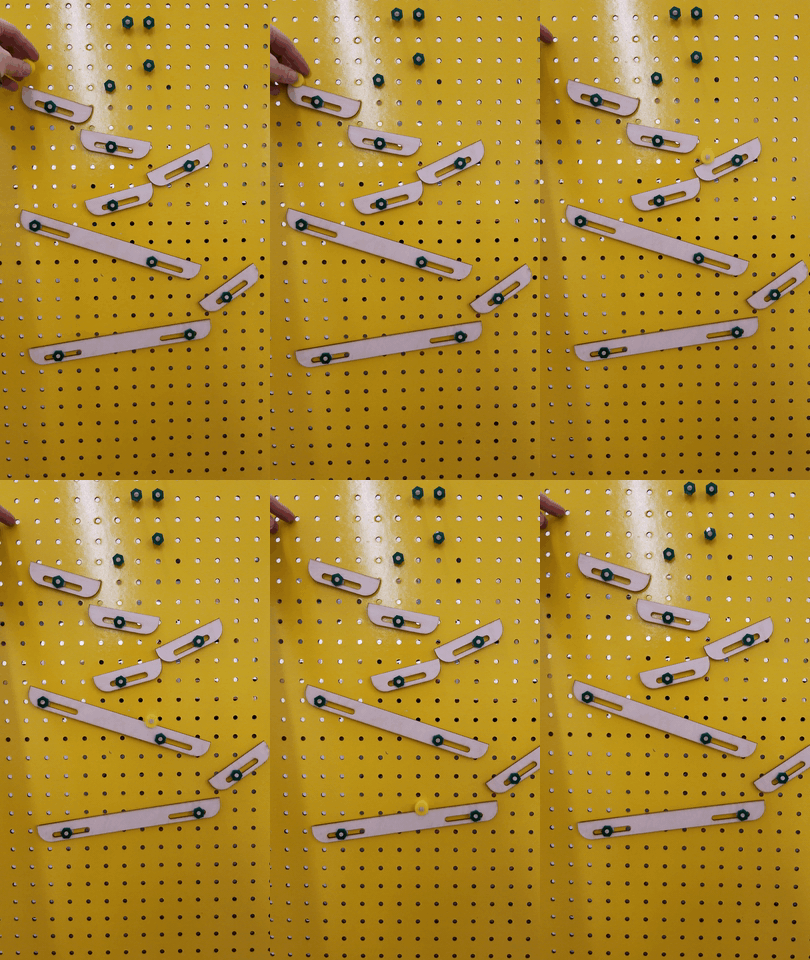
First stop, I crashed a grade school's science fair. These were kids mostly under 8, so I could validate whether or not the single plane of play would be more apporachable for kids younger than the target age for marble mazes. Armed with a quick and dirty home depot peg board, a handful of laser cut track pieces, and a variety of marbles & little spool shapes that rode the tracks, I set up shop and watched. Kids absolutely mobbed it, and gave me two big insights.
INCLINE: It became immediately clear that the spool shapes held onto the tracks great, but were not nearly forgiving enough to make the big jumps or tolerate track pieces that were not all the way in. Marbles were not so easily deterred and kept on rolling. A little too successfully though, they were flying off left and right. I adjusted the whole setup to lean back slightly and VOILA, the marble' speed was reduced, and were suddenly much more inclined to stay on track (ba dum ch).
SCALE: Though I went with such a large board to accomodate many kids at once, it became clear that the vetical height was actually needed. I had set up the track to span from side to side in long, slow rolling movements, but the moment they got hands on it, the kids each immediately redesigned so that a complete track was within arms reach. They'd start a litle above forehead, keep it roughly sholder width, and design to the floor. Even two kids working together would play within a similar sized field. When asked what to change, they all said "taller!".
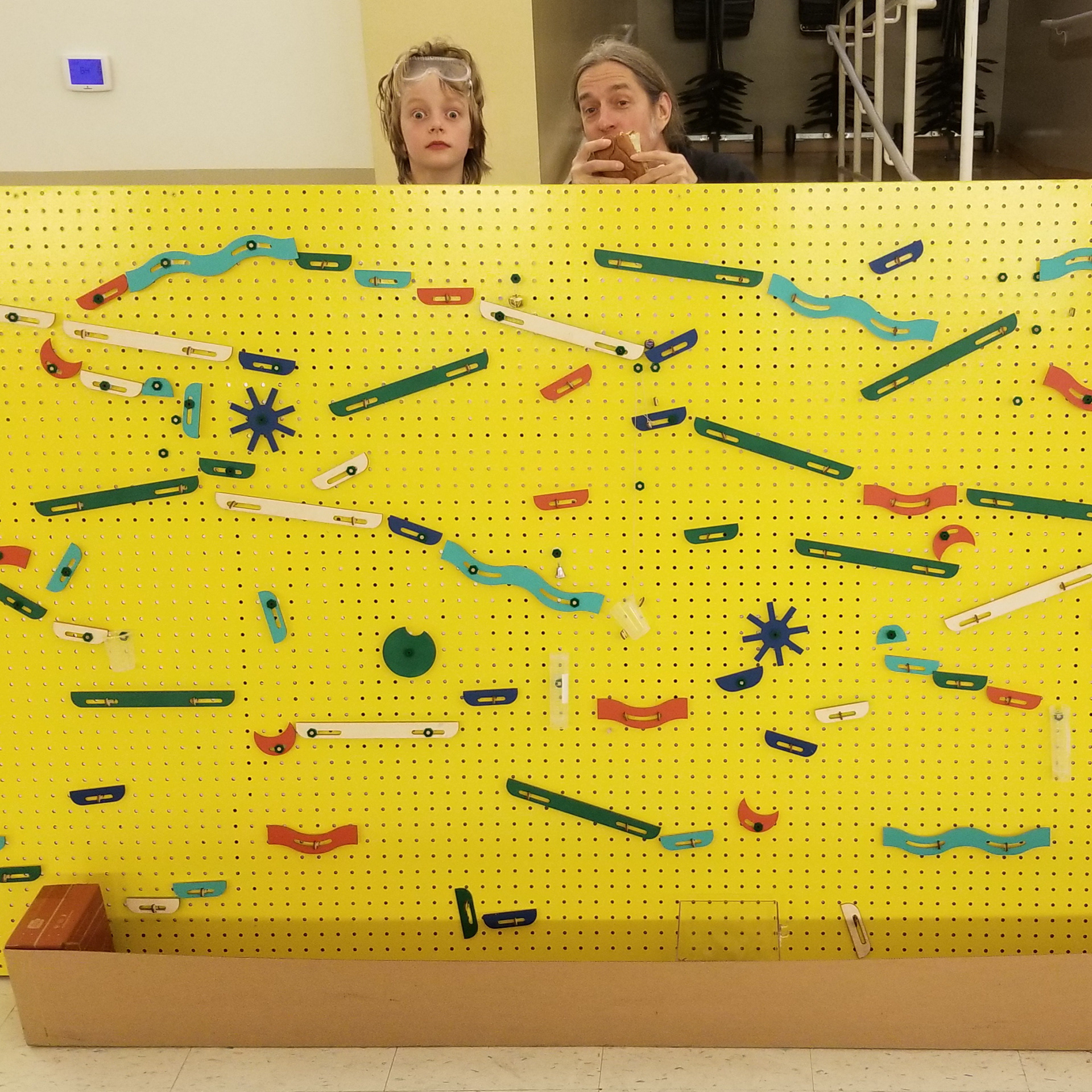
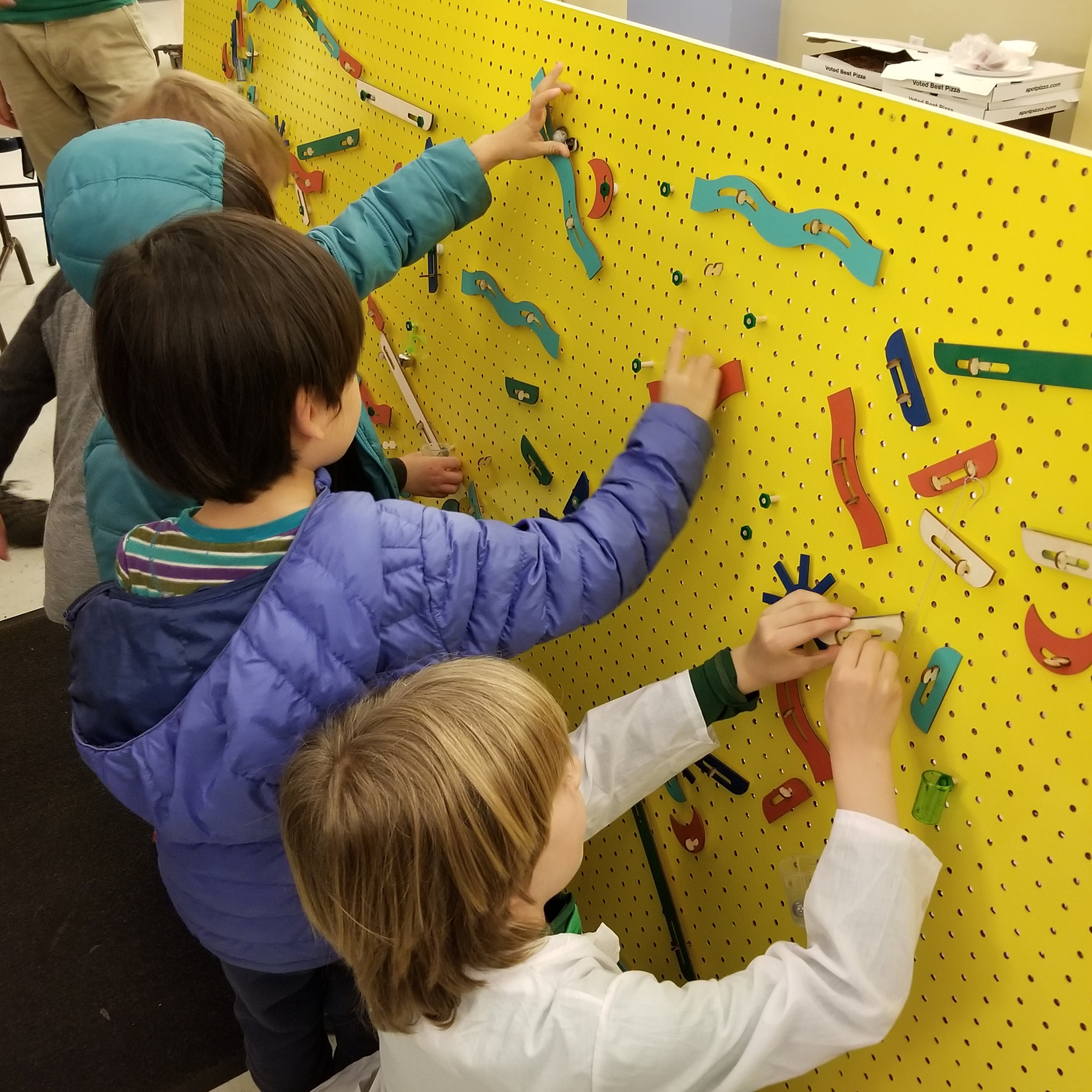
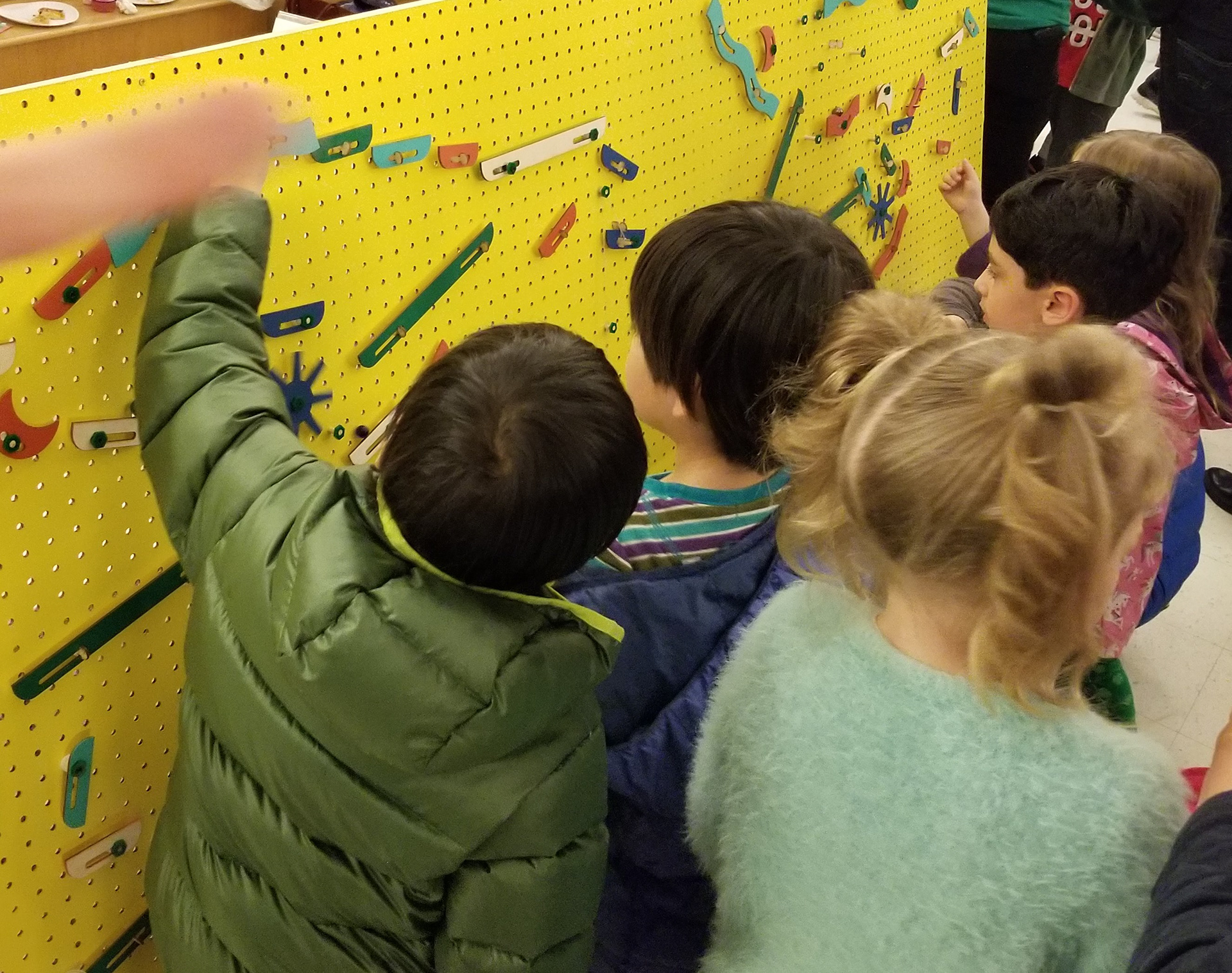
3. DEVELOPMENT (insight: material)
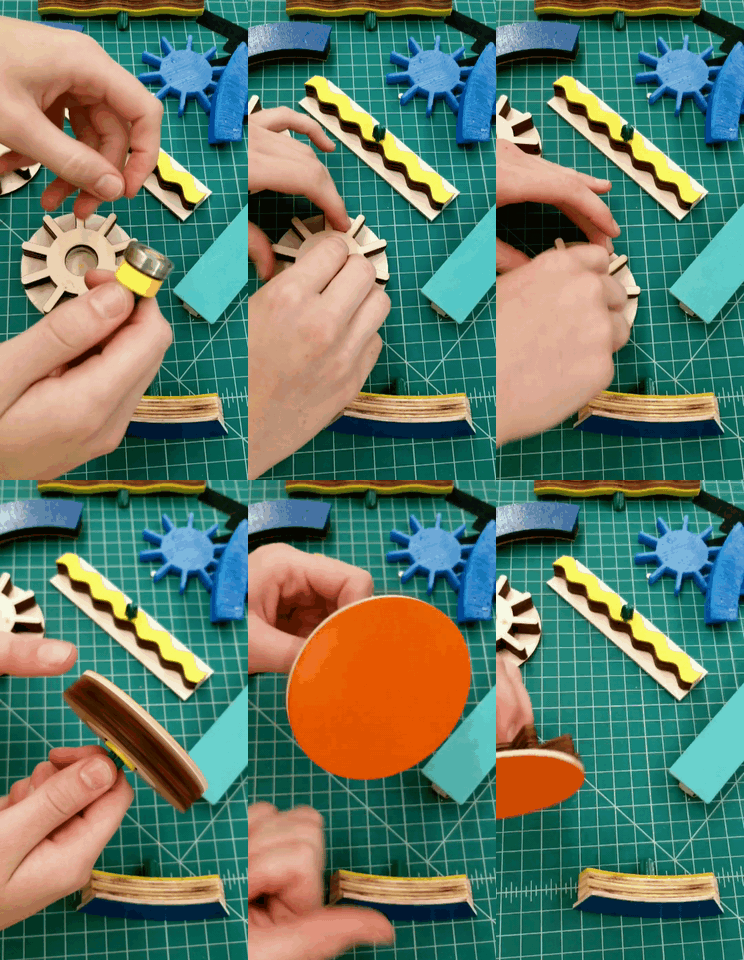
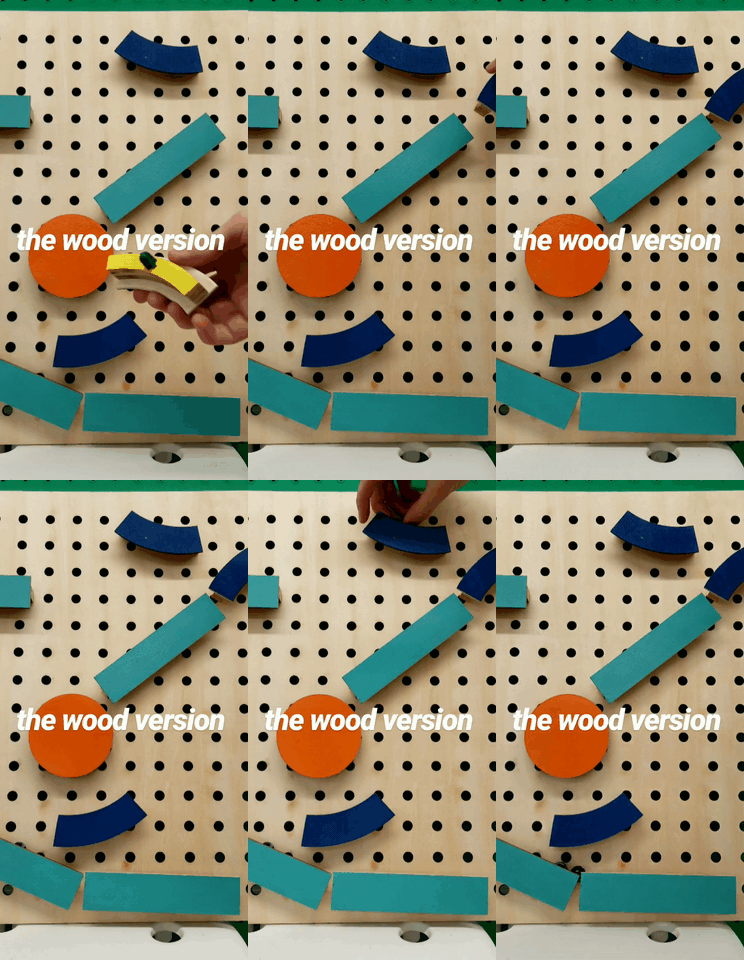
Armed with my initial findings, I dove into iterating on the track pieces, play testing a huge range of attachement methods. I kept trying to simplify further until I simplified it down to... just a nub. Being able to press fit straight into the peg board was like kicking down the dam on their ability to design tracks. Since the board was laser cut, I could control the tolerance of the board's hole diameters pretty well, but what I couldn't solve for was angle. Kids would very intentionally position the piece on the board at a specific angle, but when the marble would impact, the angle came out of alignment. I needed friction. I needed a grabbier material. I needed... thermoplastic rubbers!
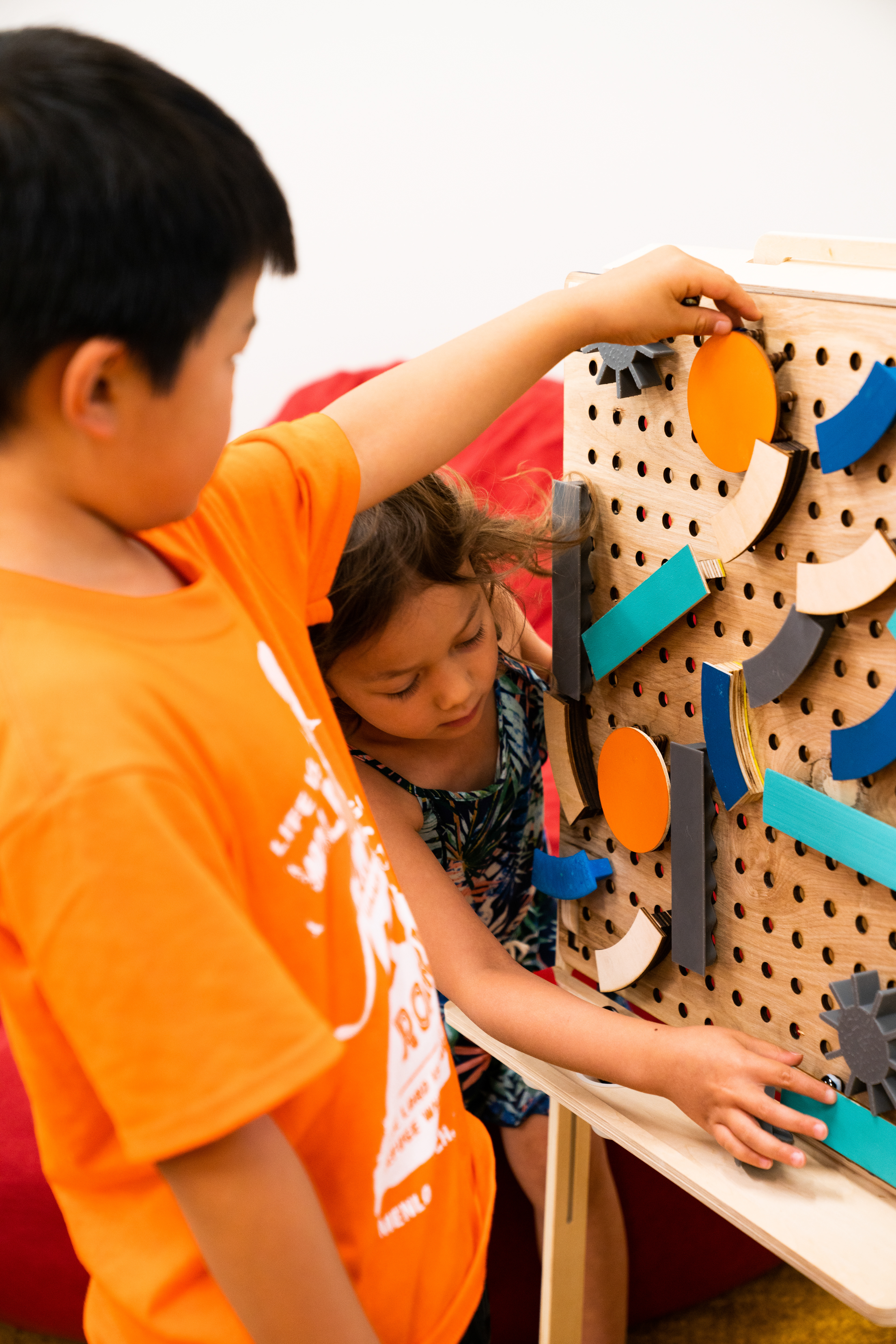
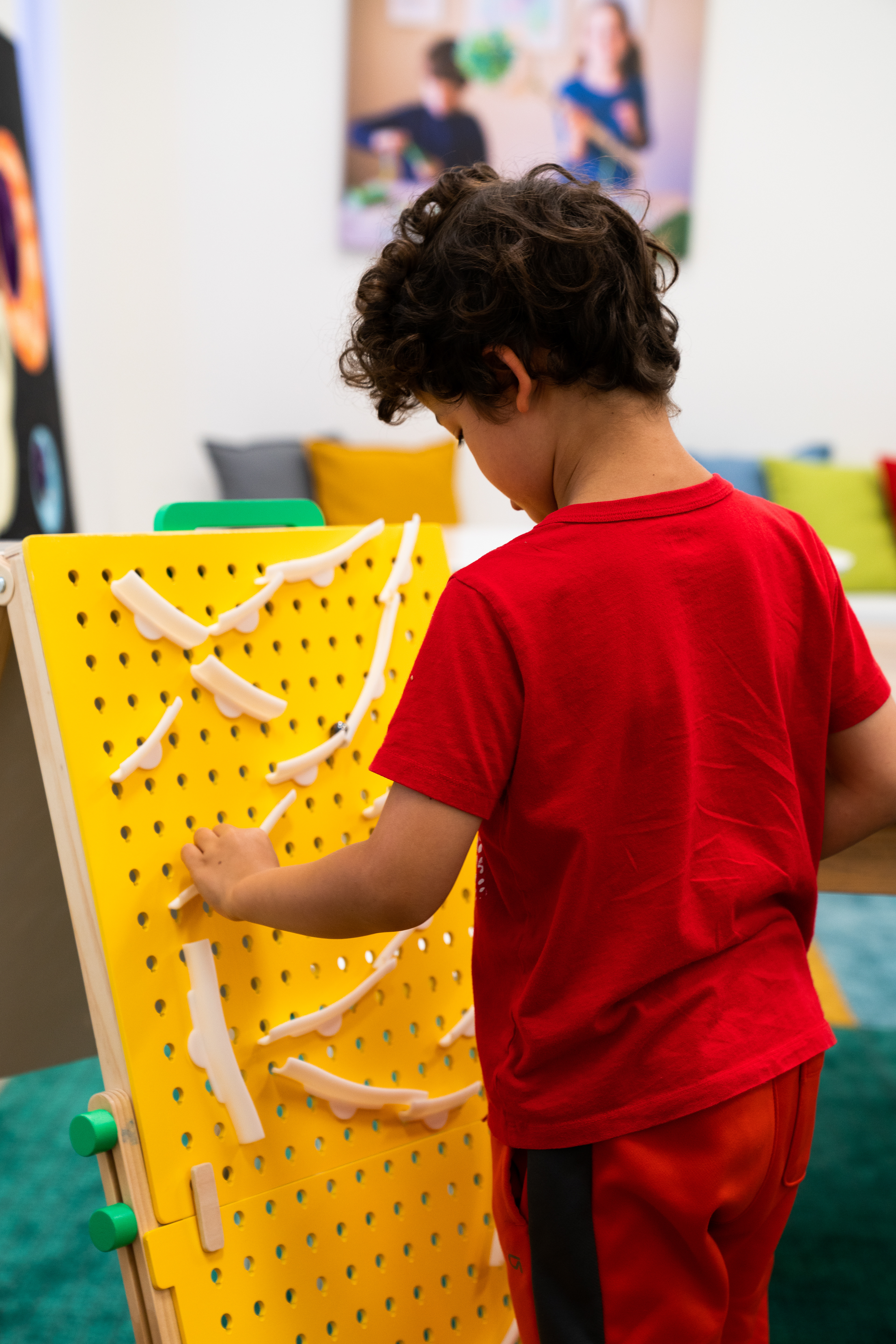
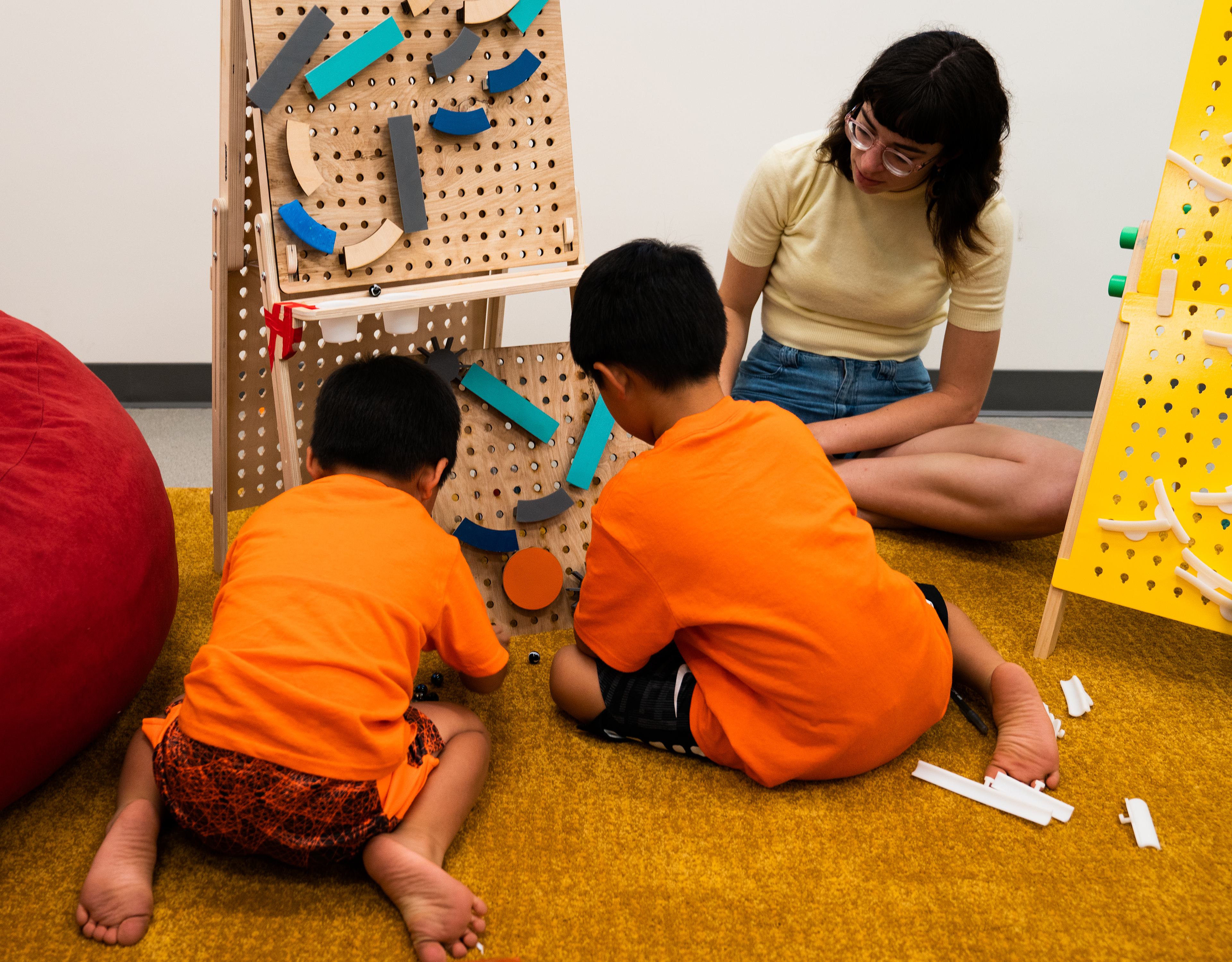
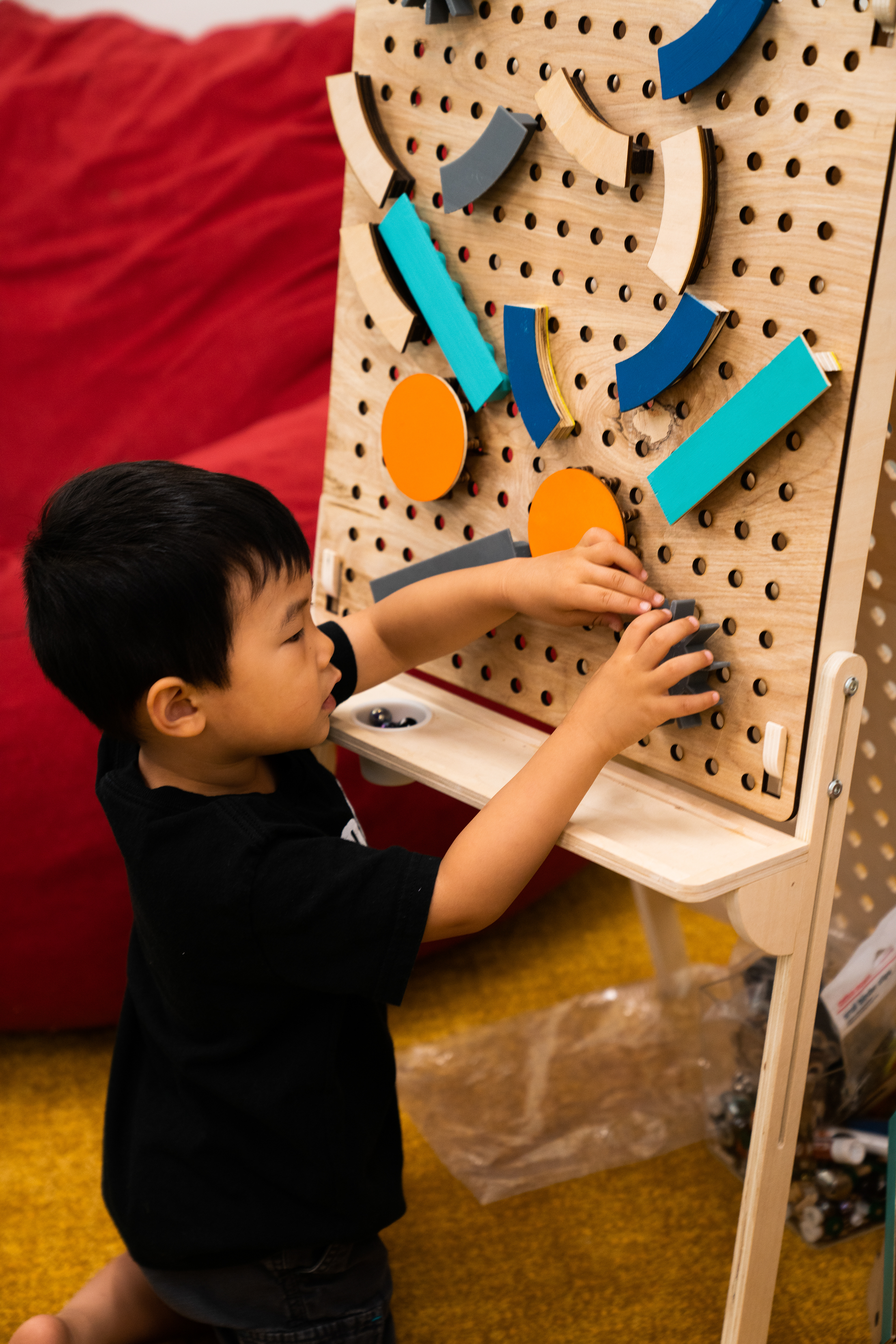
Protoyping in rubbers wasn't exacly a rapid option, so some plasti-dipped 3D printed nubs would have to do. Even with that extra bit of friction the improvement was dramatic. I was able to develop the final assortment of pieces and get accurate costing.
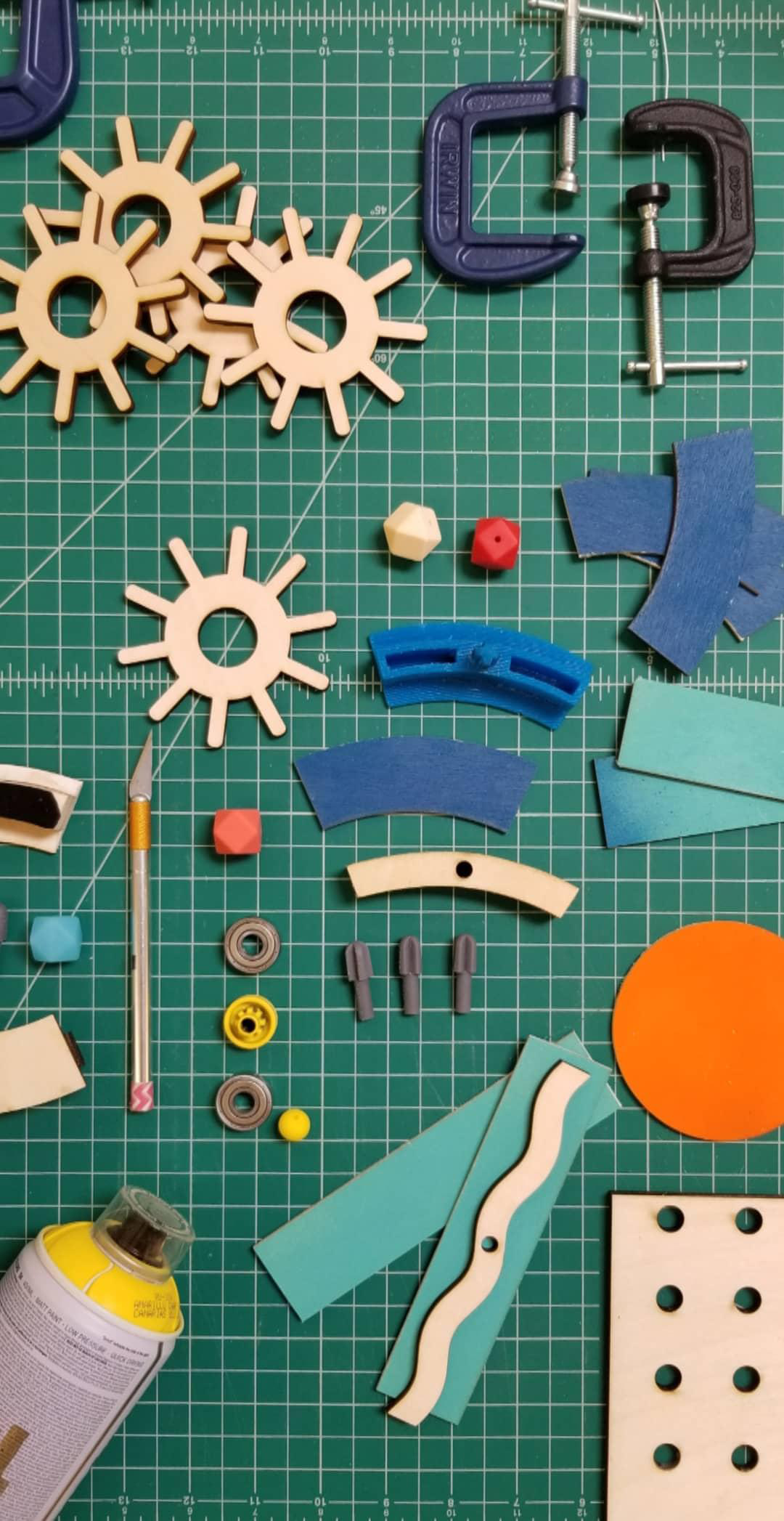
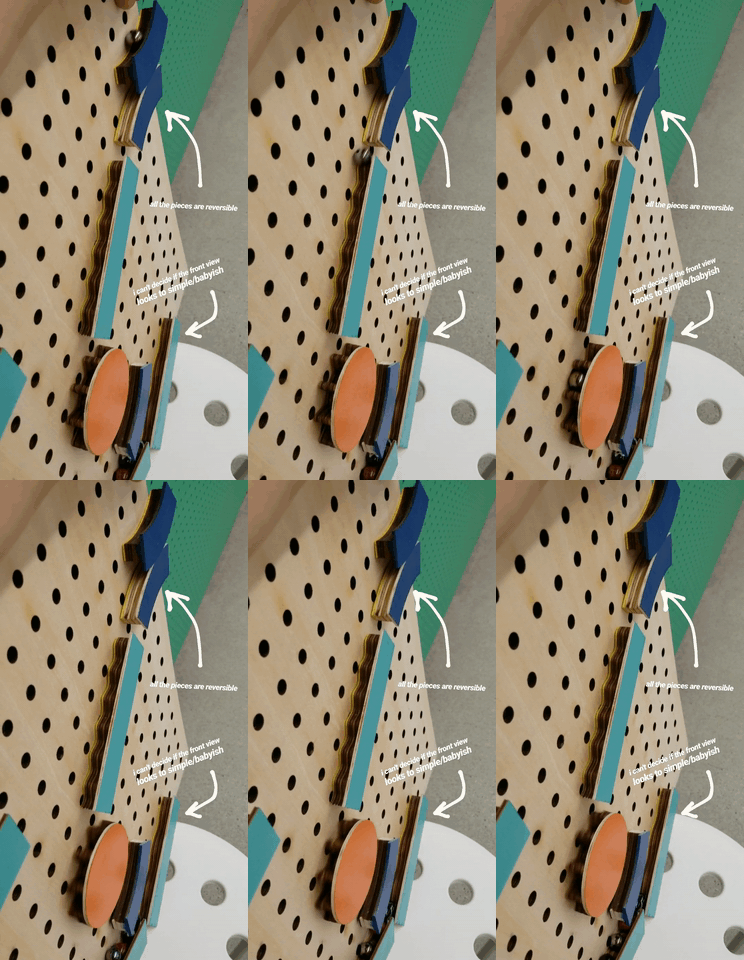
With an idea of actual cost and knowing the play was working, I dove into parent interviews to validate the form. Interviews revealed that to earn a place in the home, any big new item needed to 1) grow with their child, not be instantly obselete, 2) be multi use, to ensure it weathered changing interests or mulitple kids, and 3) go away when not in use. Setting up, tearing down, and storing big toy sets were a big pain point. Often literally, if barefoot.
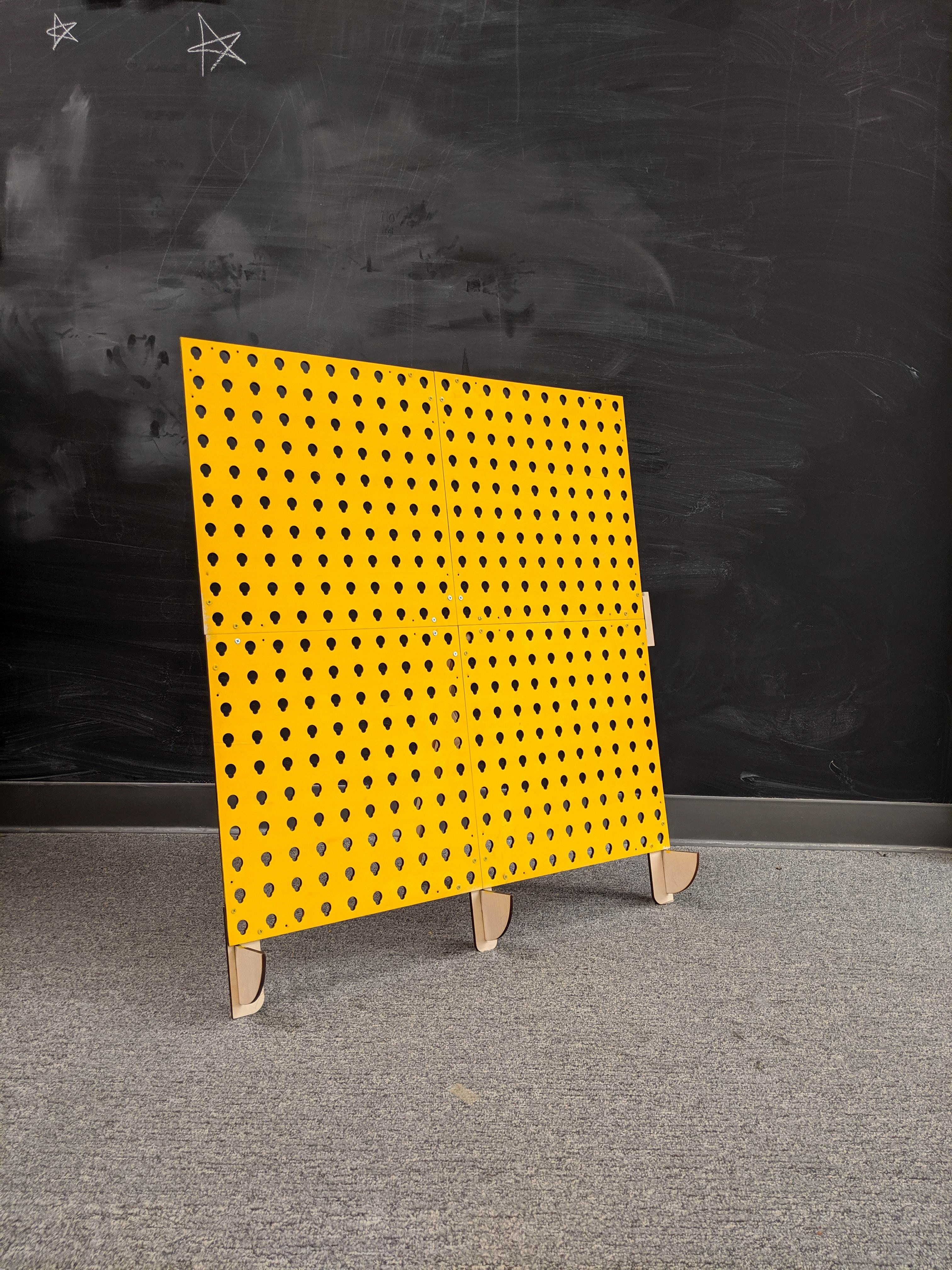
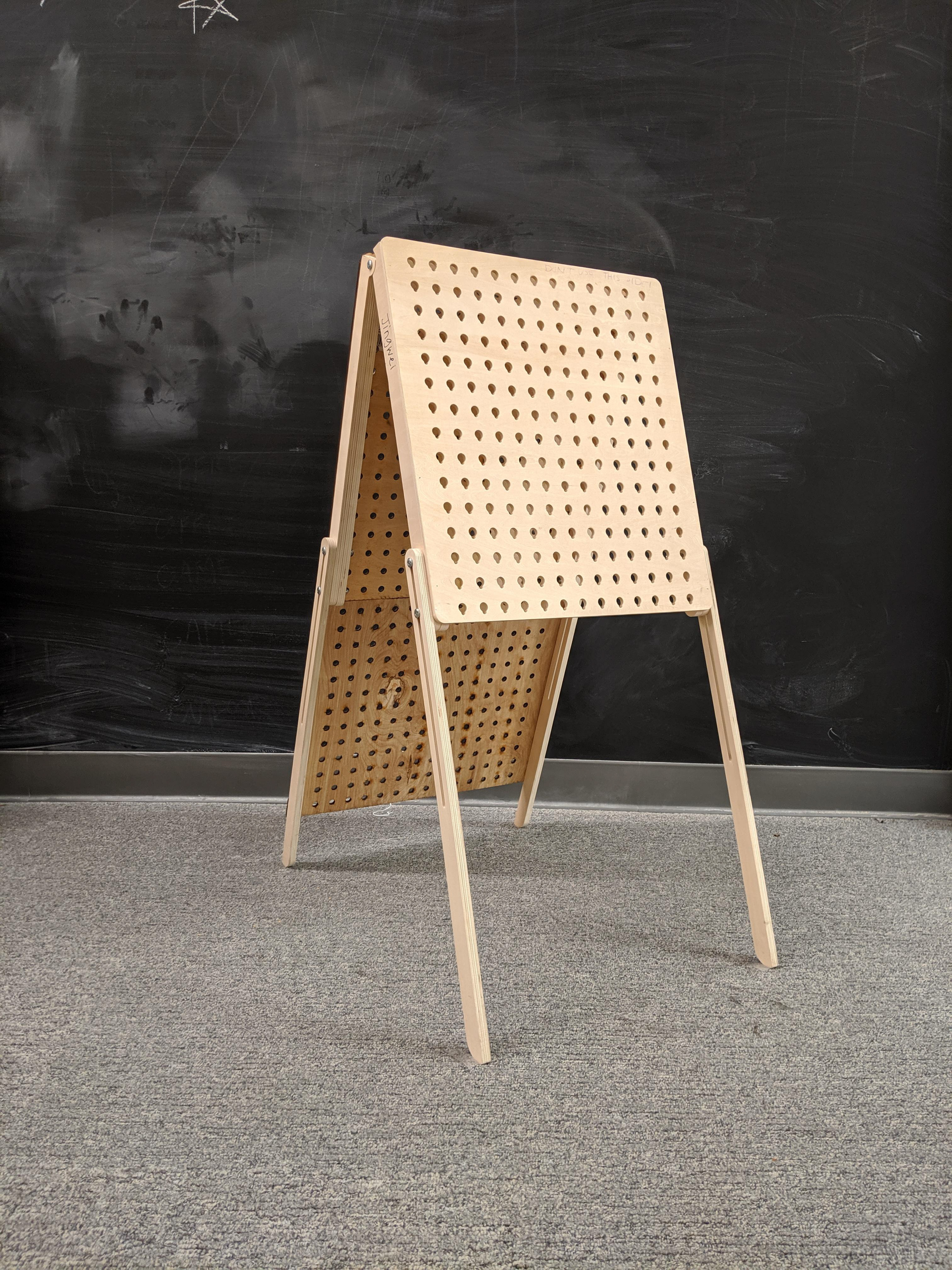
So, the easel. I needed the incline for functionality, and the aditional use of, well, an art easel on the back was a huge plus for parents. At such a high price point, it was insurance that the item would see use. The easel also could close and sliding into a closet. The canvas bins were added to the bottom to catch marbles during play and keep the track pieces tidy when stored.
And though KiwiCo specializes in build-it-yourself toys, we wanted the engineering to stay on the marble run. This structure only requires 10 thumb screws for assembly out of box, no tools necessary. The moms, they pled; please don't ruin christmas morning.

5. PRODUCTION (insight: quality control is king)
KiwiCo specializes in small, hands on STEAM projects, and despite having never designed or manufactured anything this large, wooden, or expensive before, we were excited to test our brand promise of "inspiring creative confidence" in a new market... in time for the 2019 holiday. I got the greenlight to start designing end of May 2019, and by December 2019 the product was arriving in homes.
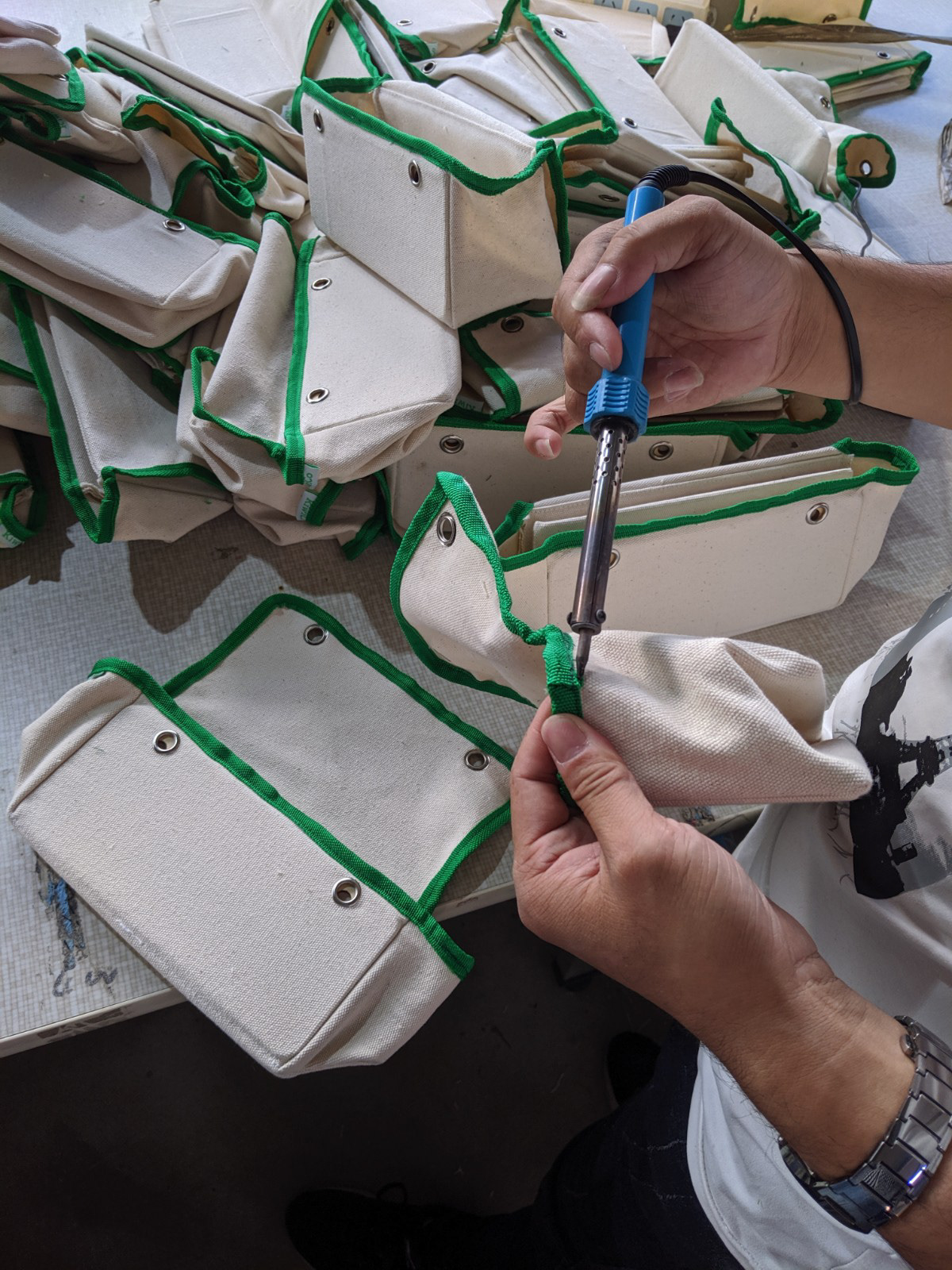
To meet the demanding schedule (concept to container ship in 6 months), I traveled onsite to work directly with our manufacturing partners in China during early production. It was great to get on the factory floor to help design jigs, work through logistical changes to keep product clean, and adjust my design to better suit the machinery.
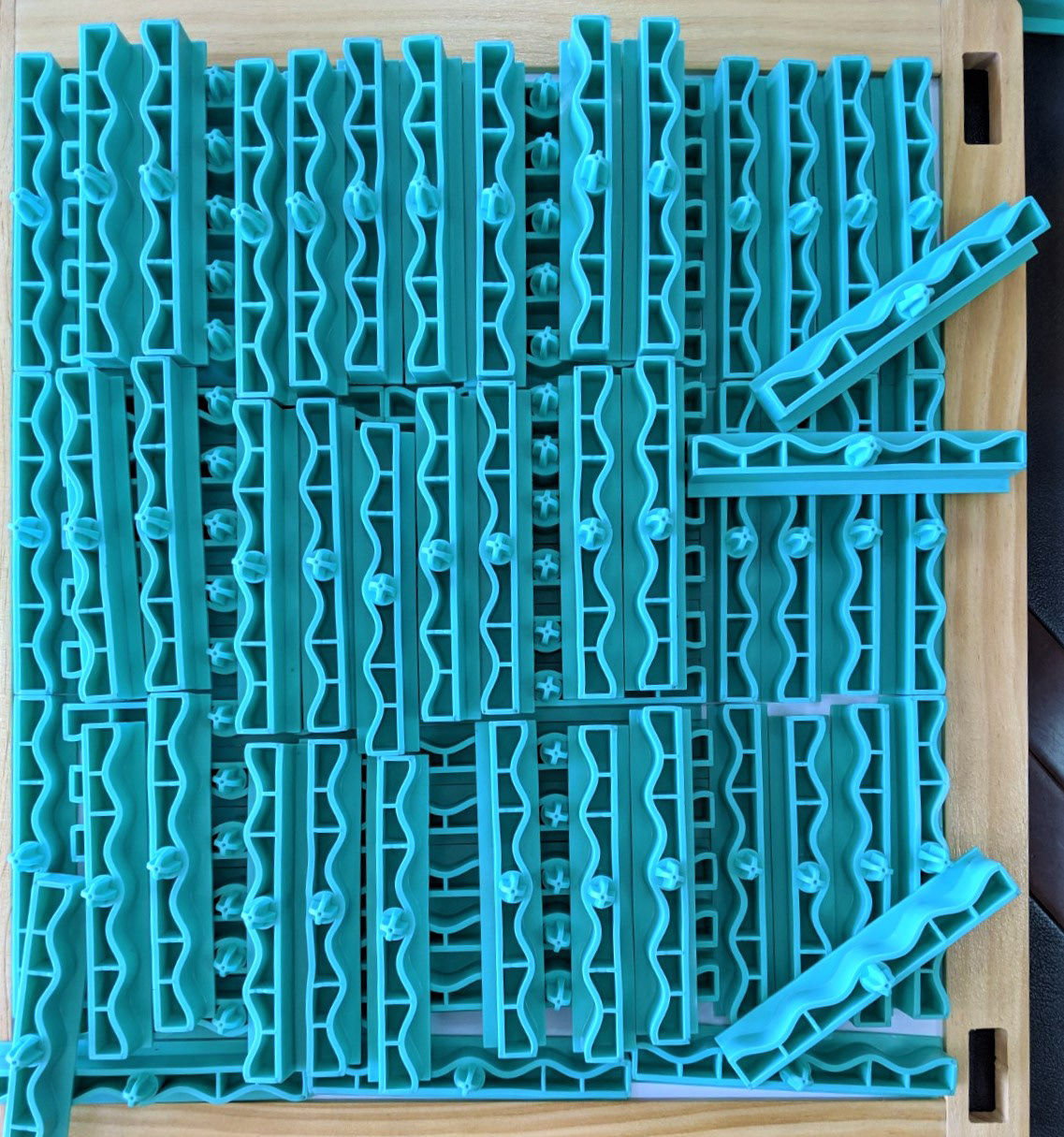
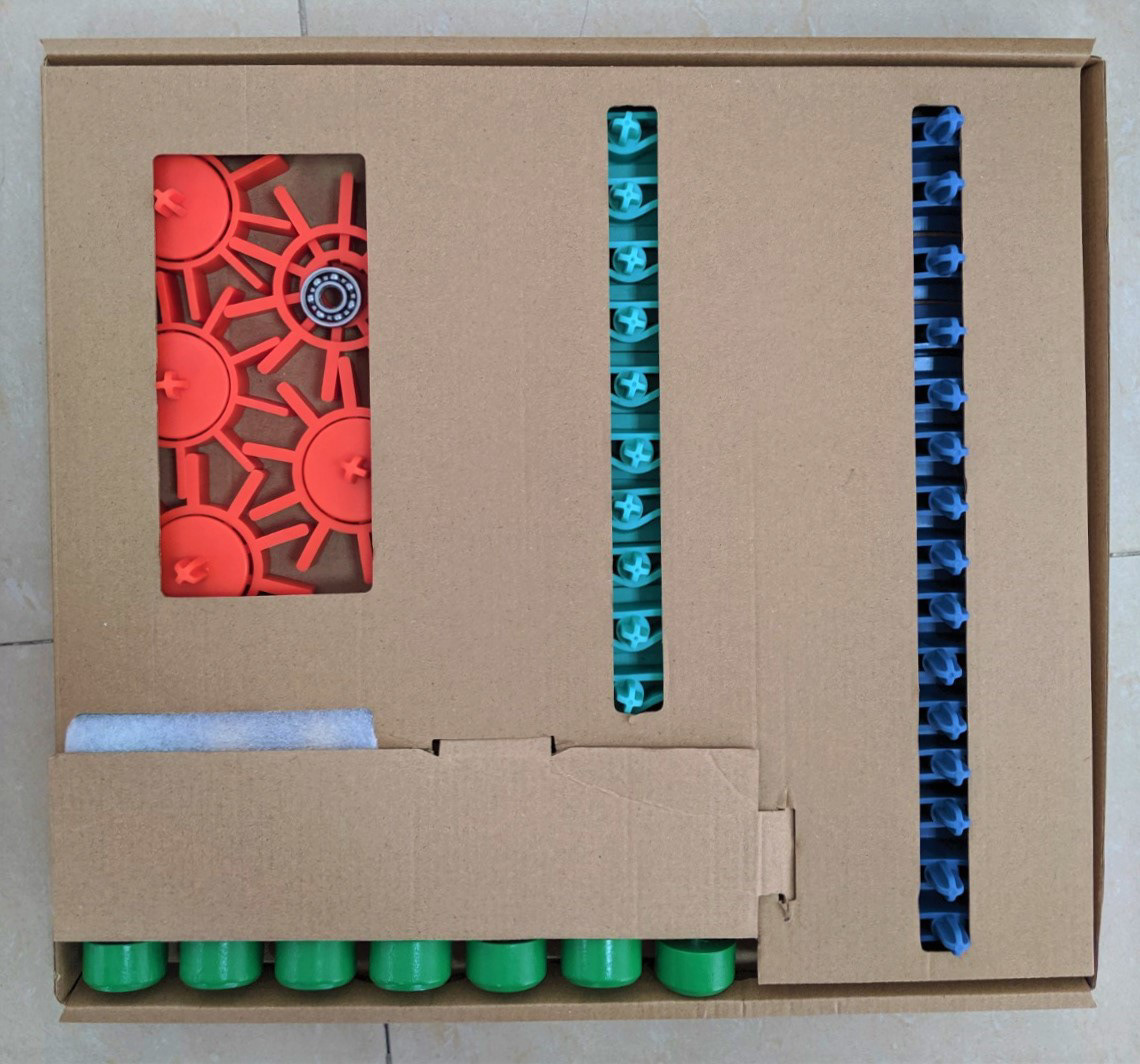
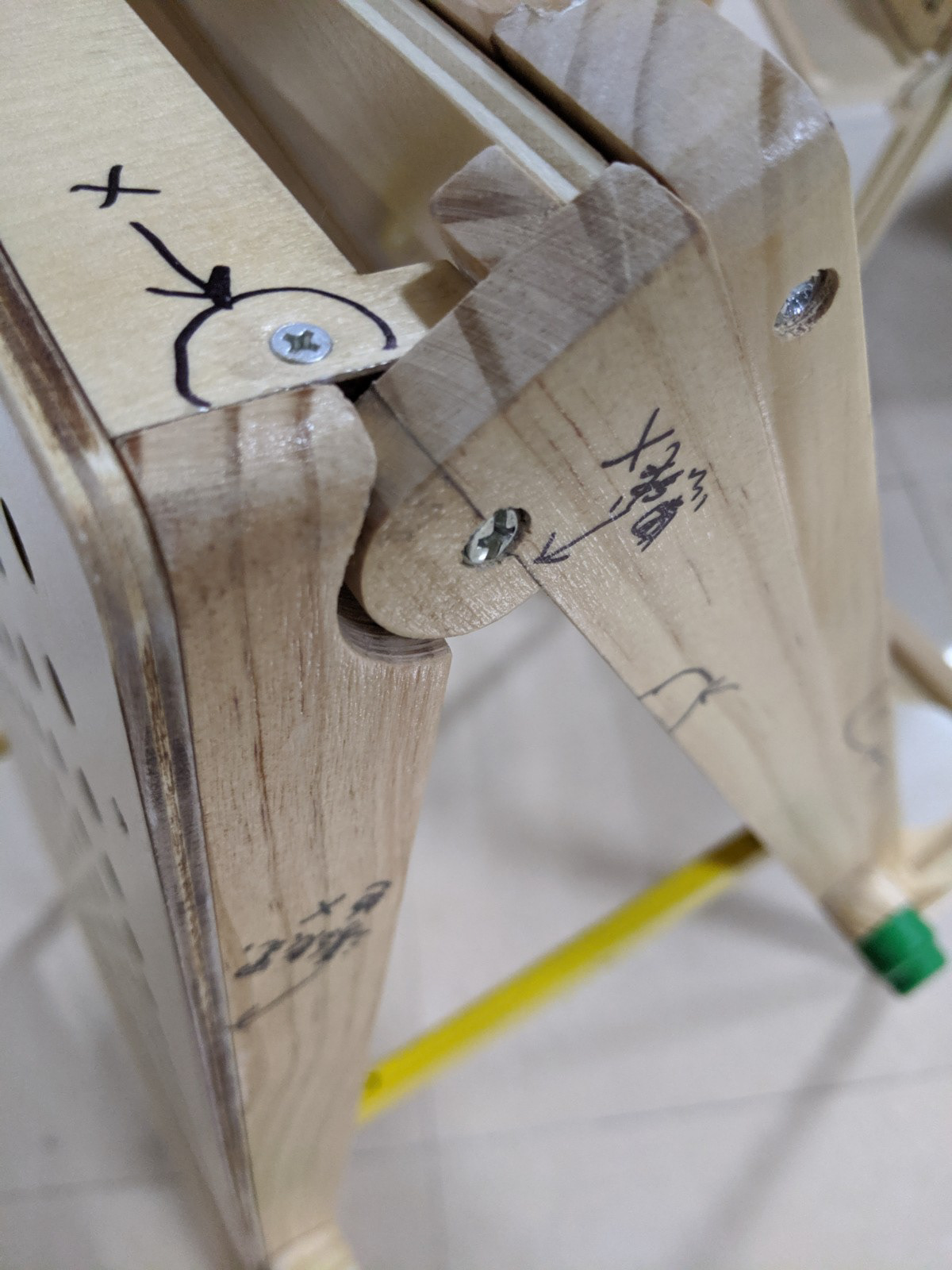
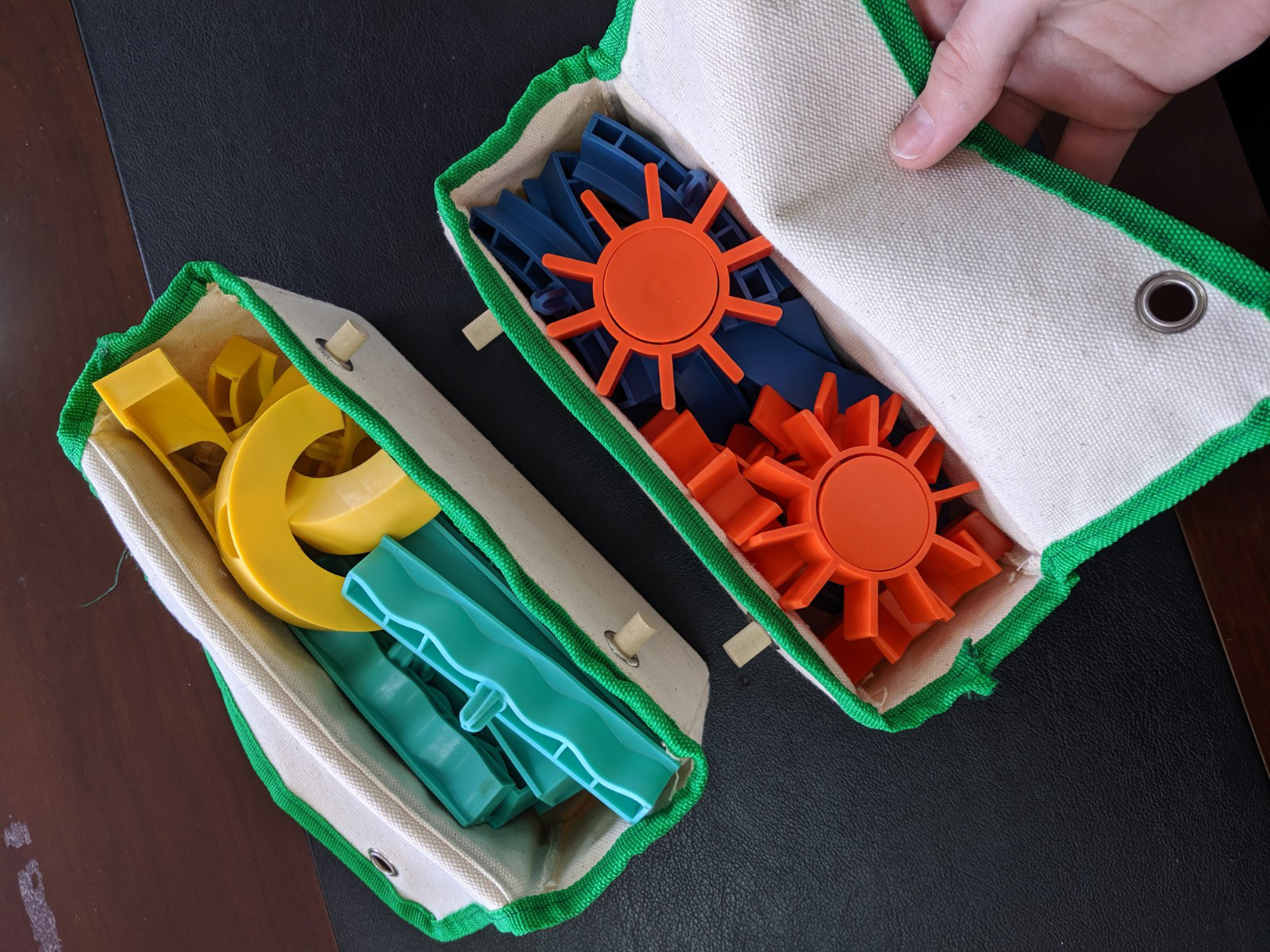
Keyshot renders! We needed to print the packaging before a photo ready sample arrived, so I ended up fully modeling and rendering it (R.I.P. my laptop at the time). I'm not a huge fan of the brand's packaging style, but I am proud of clawing back multiple dollars on COGS by optimizing the product and package size for palletization.
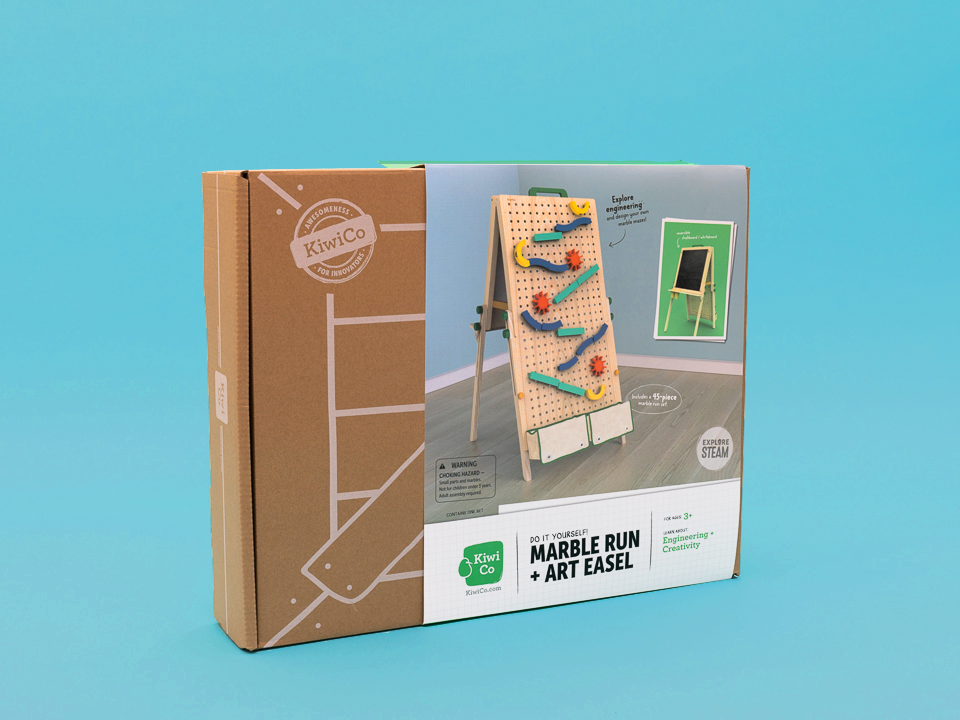
Some years later, I convinced folks to let me redesign it in advance of another production run. I overhauled the construction to both be much more efficient and reliable to manufacture, while also making it generally much sturdier. I also managed to significantly reduce the carton size without affecting product size, saving big on both rduce inbound and outbound shipping costs. Original design above, stremalined design below.